
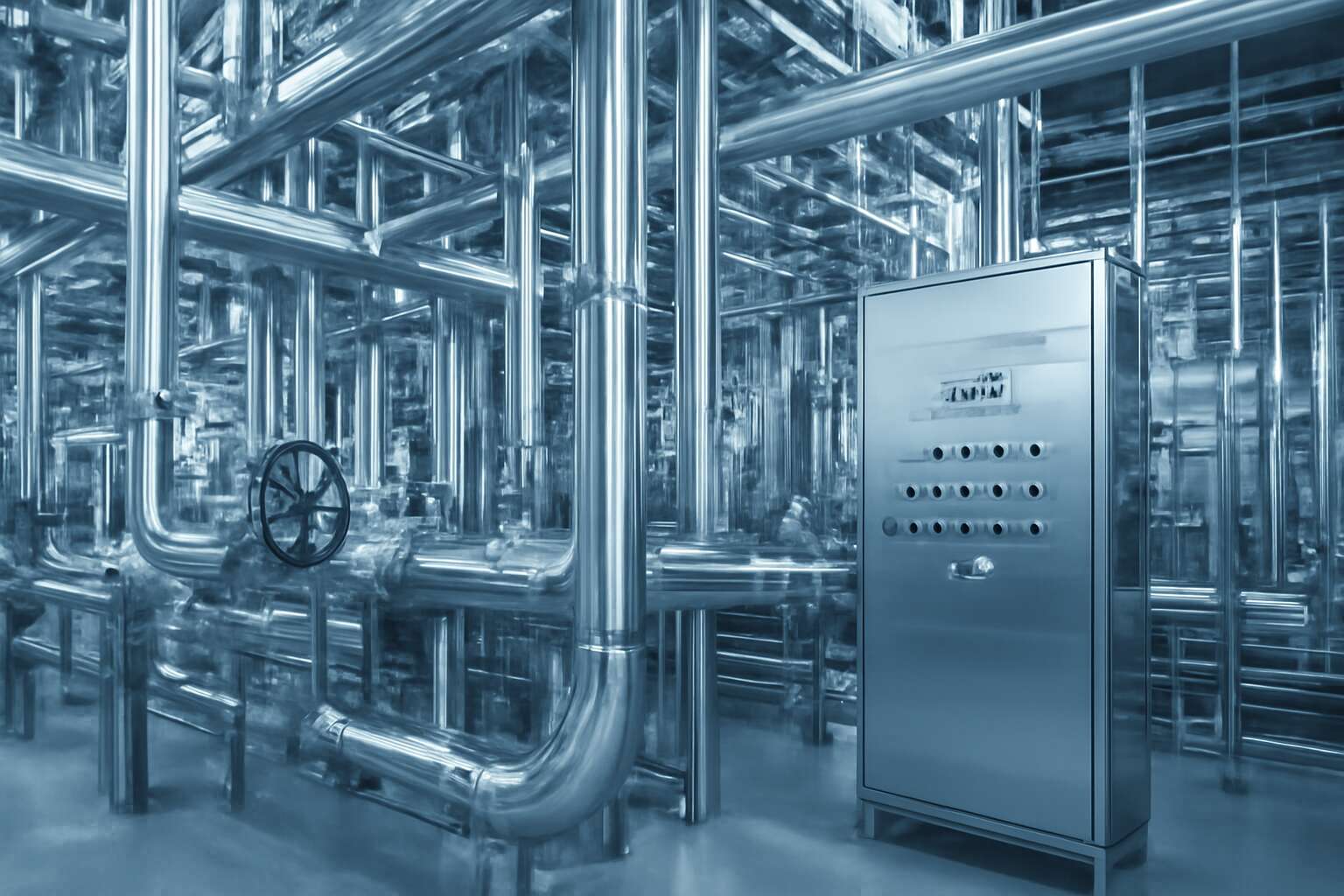
Stainless steel industry landscape
Global market dynamics
Global stainless steel production rose 3% last year, a vivid pulse in the stainless world that travels from China’s furnaces to South Africa’s coastal hubs. The momentum hints at resilient demand across sectors and steady investment in plant modernization.
In the stainless world, market dynamics hinge on energy costs, alloy trends, and the recycling loop that keeps assets in motion. Here are current accelerators:
- Infrastructure and water-industry projects driving consumption
- Preference for corrosion-resistant grades in harsh environments
- Shifts in supply chains and regional trade affecting pricing
South Africa sits at a crossroads of beneficiation and regional demand, shaping a nuanced chapter in this landscape where local mills collaborate with global buyers for durable, safe surfaces.
Core stainless steel alloys
In the stainless world, the core alloy toolkit dictates life-cycle cost, uptime, and safety on shop floors and in installations. “The alloy you choose today decides the plant’s tomorrow,” echoes engineers across coastal SA projects—mining support, water-treatment, offshore platforms. South Africa’s heavy industries rely on austenitic grades for ductility and corrosion resistance, ferritic grades for affordability, martensitic grades for wear resistance, and duplex for a powerful mix of strength and saltwater resilience. These families do more than resist rust: they extend service life and enable recycling into new performance, aligning with modernization goals.
- Austenitic
- Ferritic
- Martensitic
- Duplex
Every choice carries a ripple: energy costs, welding behavior, and lifecycle performance shape the bottom line for SA manufacturers in the stainless world. The core alloys listed above align supply with demand, enabling standardization across projects and smoother scrap loops that feed new stainless steel grades into the economy.
Production processes and finishing
Across South Africa’s stainless world, uptime hinges on the right production mindset. A simple rule of thumb: standardize from melt to finish and variance shrinks on the line. In modern shops, stainless production blends energy-conscious rolling with disciplined finishing, turning slabs into coil, sheet, and bar for mining, water treatment, and offshore platforms. The payoff goes beyond rust resistance—longer life and easier maintenance feed the economy and keep plants humming. Yes, really.
- Melting and continuous casting to slabs
- Hot and cold rolling to sheet/gauge
- Annealing, descaling, and pickling
- Surface finishing: BA, satin, and passivation
Even the best melt shop relies on finishing discipline. Visual checks and ultrasonic thickness tests, plus corrosion simulations, keep surprises out. South Africa’s mills favor flexible finishing lines to meet diverse specs and shorten lead times; discipline remains non-negotiable in the stainless world.
Regional supply chains and trade
The stainless world never rests; a coil can move from Durban’s port to a Gauteng workshop in days, not weeks. In South Africa, regional supply chains stitch together mills, distributors, and fabricators, while trade links across Southern Africa hinge on shared standards and agile logistics. This environment rewards those who plan with clarity and move with pace.
- Strategic ports and rail corridors that cut transit times
- Diversified alloy availability and on-site certification programs
- Close collaboration between mills, stockists, and fabricators ensuring traceability
As regional trade policies harmonise, South Africa sits at the intersection of Africa’s mining, water, and infrastructure ambitions. Ports, rail, and bonded warehouses funnel materials toward refineries and factories, keeping suppliers nimble and customers satisfied.
Applications across sectors
Kitchen and consumer appliances
In the stainless world, kitchens bloom under a moonlit chrome that never yields. Two in three modern South African homes choose steel for resilience, hygiene, and a gleam that outlives faddish trends. From refrigerators and range hoods to sink basins and cookware, stainless steel clothes appliances in quiet armour—easy to clean, endlessly durable, and wonderfully resistant to daily drama. It catches light like a secret and keeps pace with the night-time heartbeat of the home.
- Refrigerators and freezers
- Ovens, stoves, and range tops
- Sinks, faucets, and worktops
- Pots, pans, and bakeware
- Dishwashers and compact appliances
- Commercial kitchen surfaces and counters
Beyond the home, hospitality, healthcare, and food-service nod to stainless steel’s hygienic glow—a surface that resists stains and scrapes while sipping the night with a calm, practical shine! The kitchen becomes a stage where form and function converge, and every notch of the blade seems to sing to the light.
Architecture and construction
In the SA skyline, the stainless world glints with a quiet swagger. A recent industry snapshot shows 68% of new commercial builds in South Africa opting for stainless steel façades for longevity and hygiene—proof that form and function can share the spotlight. I call that weather-proof glamour—the kind you can wear to meetings and still wipe clean with a rag. Architecture isn’t only about bones and beams; it’s about surfaces that shrug off weather, resist corrosion, and keep a showroom shine from dawn to dusk.
Across sectors within architecture and construction, stainless steel finds a chorus of roles beyond kitchens.
- Architectural facades and cladding that shrug off SA sun and rain
- Interior fit-outs, stair rails, and splash-prone zones with easy-clean surfaces
- Healthcare and education facilities demanding hygienic, durable finishes
- Public infrastructure and civic buildings where long life and low maintenance matter
- Industrial facilities and mining sites that endure harsh environments
Automotive and energy sectors
‘Durability isn’t loud; it’s stainless,’ a regional engineer once told me. Welcome to the stainless world, where automotive and energy sectors lean on metal that ages gracefully under sun, dust, and heat. In South Africa, these applications go beyond gleaming components—they’re about performance under pressure and easy maintenance in harsh climates.
Automotive uses include hearty exhaust systems, corrosion-resistant fasteners, and robust heat exchangers. In energy, stainless shines in wind-turbine components, solar tracker frames, desalination lines, and hydrogen storage vessels.
- Heavy-duty exhaust systems
- Desalination and water-treatment pipelines
- Wind-turbine inner components and pressure vessels
There, durability meets rugged terrain.
Medical and laboratory equipment
In South Africa’s busiest clinics, stainless world isn’t just metal; it’s a pledge to sterility under pressure. The right stainless grade shrugs off aggressive cleaners, blood, and saline, keeping operating rooms clean and safe through countless cycles of autoclaving and use.
Medical and laboratory equipment relies on corrosion resistance and hygienic finishes. Think sterile instrument sets, autoclave-ready housings, bench tops, diagnostic enclosures, and resilient storage cabinets that endure harsh cleaning regimens.
- Surgical instruments and trays
- Autoclave-ready housings and cleanroom surfaces
- Diagnostic equipment enclosures and sterile storage cabinets
Across these applications, the traits translate into reliable performance where it matters most—patient outcomes, research integrity, and practical maintenance in South Africa’s climate.
Choosing stainless materials
Alloy selection criteria
“The stainless world rewards the patient alloy selection,” a veteran designer once whispered, and the coastal South African shoreline proves the point with gleaming, corrosion-resistant certainty. When choosing materials, we map performance under heat, salt spray, and time, turning ambition into alloyed confidence.
- Corrosion resistance tailored to service environment (coastal vs. inland)
- Mechanical strength and ductility for durable fabrication
- Formability and weldability for complex shapes
- Thermal stability and expansion for heat-loaded equipment
- Availability and lifecycle cost within local markets
In the stainless world, designers balance these criteria with practical realities—lead times, local availability, and maintenance expectations—and craft solutions that endure under sun and spray alike. This approach keeps projects vibrant, from water-treatment plants to architectural silhouettes, inviting wonder without compromising reliability.
Surface finishes and treatments
Coastal air and bold ambitions converge in the stainless world. In South Africa, corrosion resistance isn’t optional—it’s a requirement for durability in plants, ports, and public spaces. Surface choice starts with the service environment: salt spray, humidity, and heat cycles determine how long a finish will stay clean and resistant!
For SA projects, finishes and treatments commonly used include:
- Brushed (No. 4) or satin finishes for practical cleanability on handrails and façades
- Electropolished surfaces for superior corrosion resistance and easier cleaning
- Passivated and pickled surfaces to restore the protective film after fabrication
- Mirror or high-sheen finishes for architectural accents with mindful maintenance
Surface decisions ripple through the lifecycle: fabrication, routine cleaning, and long-term reliability. In the stainless world, the right finish aligns with sun and spray—sustaining form and function without becoming a maintenance burden.
Corrosion resistance and environmental factors
Across South Africa, choosing stainless isn’t a luxury—it’s a shield against wear. In coastal and industrial zones, corrosion can gnaw at assets and uptime, turning maintenance into a hidden tax. I’ve seen how salt spray, humidity, and heat cycles decide how long a finish stays pristine, and how that knowledge shapes long-term performance! Some projects report maintenance costs rising up to 15% of lifecycle budgets due to corrosion.
- Salt spray exposure from coastal climates
- Ambient humidity and condensation cycles
- Temperature swings and thermal cycling
Staying ahead means aligning alloy strength with environment; in the stainless world, the craft of selection scripts a durable future for SA projects.
Cost considerations and lifecycle value
South Africa faces unique climate quirks that reward prudent material choices with quiet uptime. The right stainless solution can reduce lifetime maintenance by a sizable margin, letting assets sing rather than creak under corrosion-driven wear.
Choosing stainless materials is cost engineering as much as metal science. Upfront prices meet lifecycle value through longer service intervals, lower repainting, and fewer replacements, especially in coastal and industrial settings. In the stainless world, you balance alloy strength, fabrication ease, and long-term costs to craft durable systems.
Key cost levers include:
- Upfront material cost versus long-term savings
- Maintenance intervals and downtime expenses
- Energy, fabrication efficiency, and waste reductions
This approach speaks directly to South African project briefs, ensuring resilient performance across regions and environments.
Maintenance and lifecycle planning
In South Africa, one stuck valve can halt a whole line—yet the stainless world rewards foresight with quiet uptime. The right stainless solution blends alloy choice with fabrication pragmatism, turning potential corrosion into predictable performance across coastlines and mines.
Maintenance and lifecycle planning hinge on disciplined inspection and modular design. Consider these touchpoints:
- Passivation, surface finish integrity, and corrosion resistance as core indicators
- Environment-adapted inspection narratives for coastal and industrial settings
- Strategic spare part concepts that support fast, modular maintenance
By framing procurement as a lifecycle decision rather than a price tag, projects endure. The stainless world mindset aligns upfront material selection with long-term savings, delivering durable systems that sing through corrosion-driven wear rather than creak under it.
Sustainability and standards
Recycling and circular economy
Globally, stainless steel recycling rates approach 80%, turning waste into value and reshaping industry. In this stainless world, sustainability guides every choice—from sourcing to finishing—in South Africa and beyond. I’ve seen metal stories finish with a luminous, responsible glow!
Recycling and the circular economy are the spine of stainless design, guided by clear standards and traceability.
- ISO 14001 and local norms guide environmental stewardship
- Design for longevity and recyclability keeps steel in circulation
- Transparent scrap streams reduce energy use
In South Africa, energy realities reward closed loops; the stainless world thrives where policy meets practice and performance meets planet.
Industry standards and certifications
Here in the stainless world, nearly 80% of stainless scrap is recycled, turning waste into value and shaping responsible production.
Sustainability and standards are not afterthoughts but the backbone of every decision. ISO 14001 and local norms guide environmental stewardship; design for longevity and recyclability keeps steel in circulation; transparent scrap streams reduce energy use.
- ISO 14001 Environmental Management
- ISO 9001 Quality Management
- SABS/SANS certifications for stainless products
- Traceability and chain-of-custody standards
In South Africa, policy and practice converge, rewarding responsible procurement and clear reporting.
Energy efficiency in manufacturing
Stainless world energy discipline is the new profit center. In factories where every kilowatt matters, efficiency is both policy and performance, not a poster on the wall. ISO 14001 aligned practices and transparent traceability turn sustainability from buzz into blue-collar reality, guiding design for longevity and recyclability while trimming energy use along the way. In South Africa, policy and practice are catching up, rewarding energy-conscious procurement and clear reporting.
- Waste heat recovery and efficient heat exchangers
- Variable-speed drives and high-efficiency motors
- Process optimization and tighter scheduling to cut idle energy
- Insulation, building envelope upgrades, and LED lighting retrofits
Energy efficiency isn’t a gimmick; it’s the long game, quietly powering resilience.
Waste reduction and water usage
In South Africa, a 10% reduction in water use can translate into meaningful savings across stainless world facilities! When ISO 14001-aligned practices and transparent traceability govern design for longevity and recyclability, sustainability shifts from buzz to blue-collar reality.
Waste reduction and water stewardship hinge on precise standards and measurement.
- Closed-loop cooling and steam recovery
- Rainwater harvesting and greywater reuse
- Leak detection and smart metering
These measures aren’t decorative; they’re the quiet engines of resilience, turning scarce resources into predictable performance and cleaner operations.


0 Comments