
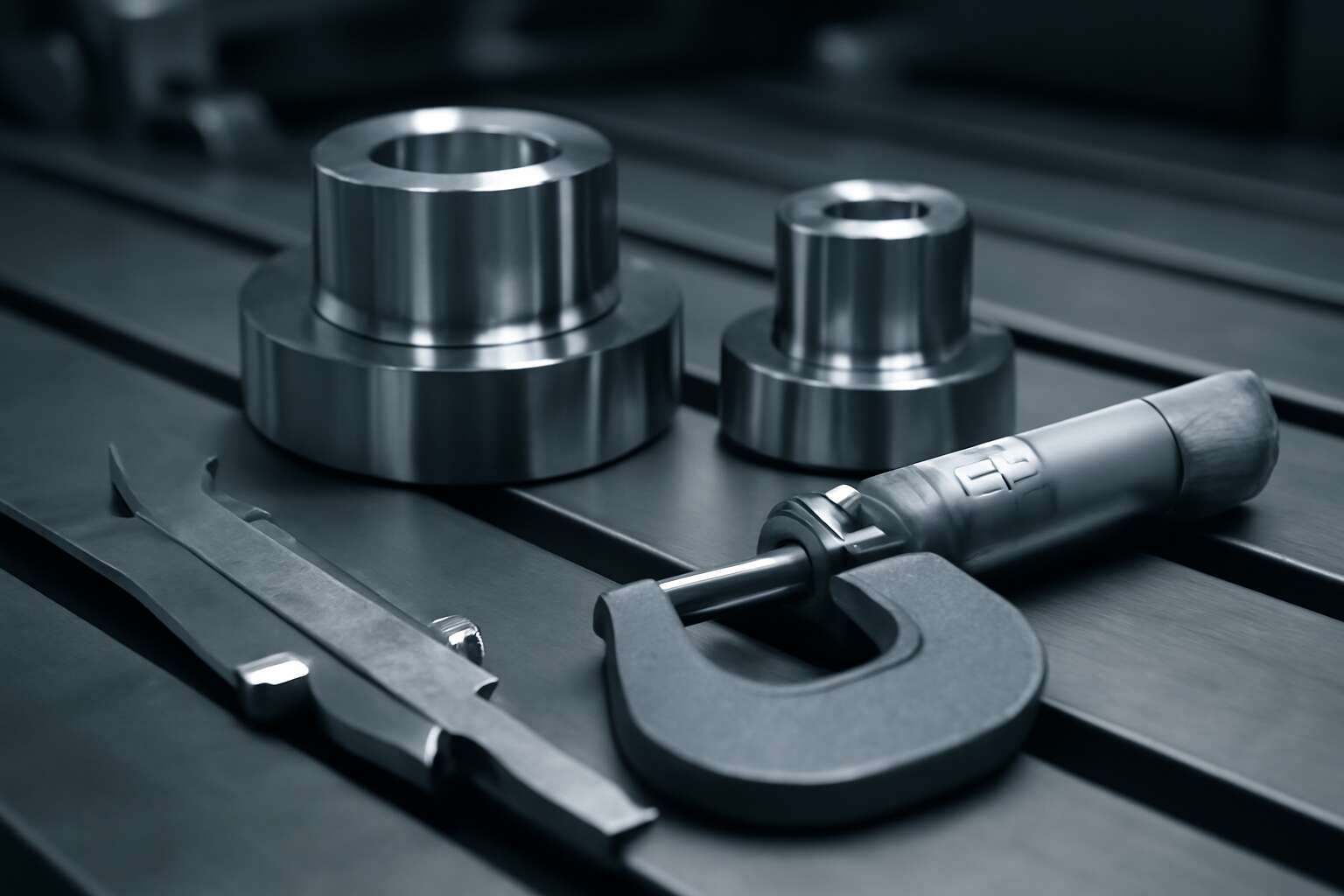
Fundamentals of stainless precision engineering and quality standards
Material selection for corrosion resistance and machinability
Across South Africa’s manufacturing landscape, corrosion costs escalate into millions each year. In stainless precision engineering spe, the aim is a quiet harmony between strength, corrosion resistance, and tight tolerances that stay put under pressure. Quality standards such as ISO 9001 guide every step, ensuring traceability and consistent finishes that survive coastal and humid inland conditions. The result is components that perform reliably, day after day, in environments where reliability is non-negotiable.
- Austenitic stainless steels such as 304 and 316 for good corrosion resistance and machinability
- Duplex grades such as 2205 for higher strength and strong corrosion resistance
Material selection for corrosion resistance and machinability is not purely chemistry; it shapes tool wear, surface finish, and lifecycle costs in South African plants. Choose alloys that balance form and function, then pair them with robust finishing and inspection standards to sustain performance in challenging service.
Key precision engineering processes for stainless components
In stainless precision engineering spe, precision isn’t a luxury—it’s a daily mandate: one micron drift can cost a plant millions. Fundamentals begin with a mindset: tolerance is a contract with reality. Components must resist drift under heat, vibration, and time, while celebrating machinability. I measure every choice not just by minuscule gaps but by lifetime performance, because quiet reliability is the true measure of quality!
Quality standards anchor the craft. ISO 9001 and meticulous traceability guide how we verify finishes that endure coastal humidity and inland wear. The real work happens in disciplined inspection, documented calibration, and process controls that keep every batch honest and the part honest as well.
- Precision turning and milling with calibrated tools
- Surface finishing and deburring for consistent texture
- Non-destructive and destructive testing to verify tolerances
Standards and certifications for stainless parts
stainless precision engineering spe unfolds like a craft—where a micron of drift can ripple through a plant’s life and cost millions. In this realm, fundamentals begin with a mindset: tolerance is a contract with reality. Components must resist heat, vibration and time, while celebrating machinability, inviting durable performance rather than fleeting perfection. In this world, the discipline guides every decision.
Quality standards anchor the craft. ISO 9001 and meticulous traceability guide how finishes endure coastal humidity and inland wear. The real work happens in disciplined inspection, documented calibration, and process controls that keep every batch honest and the part true to spec.
- ISO 9001 quality management systems
- Traceability and calibrated records
- Non-destructive and destructive testing to verify tolerances
Adopting these standards isn’t a ritual; it’s a shield. By aligning with recognized certifications, stainless parts gain enduring reliability and traceable provenance across South Africa’s coastal and inland environments.
Tolerances, fits, and quality assurance practices
Fundamentals of stainless precision engineering hinge on a stubborn alignment with reality. Tolerance is a contract with reality, not a dream tucked into a micrometer. Components must endure heat, vibration, and time while staying machinable enough to be reworked when necessary. In this craft, the discipline informs every decision, from material choice to surface finish, shaping devices that operate quietly in the back offices of industry and the front lines of manufacturing.
In the world of stainless precision engineering spe, clear tolerances, precise fits, and a robust quality assurance mindset drive consistency. In practice, that means disciplined inspection, calibrated records, and a mix of non-destructive and destructive testing to verify the part remains true to spec. The payoff is predictable performance across SA’s coastal and inland environments.
- Tolerance stack-up analysis
- Fit verification across mating parts
- Calibration and traceability logs
Materials and alloys used in stainless precision engineering
Overview of austenitic and ferritic stainless families
One micron of error can derail a component in stainless precision engineering spe, where tolerances sit on a razor’s edge and every grain counts. The right alloy choice whispers through performance—strength, corrosion resistance, and machinability all playing their part.
In the austenitic family, 300-series steels like 304 and 316 deliver exceptional formability and corrosion resistance, ideal for intricate components. Ferritic grades—think 430 and 446—offer cost efficiency, good resistance to oxidation, and magnetic behavior, making them popular for housings and trims. A modern blend, duplex stainless, merges these traits for higher strength without sacrificing workability. For South Africa, these choices map to mining, energy, and medical devices—stainless precision engineering spe powers reliability.
- 304/304L, 316/316L — austenitic, high corrosion resistance
- 430/446 — ferritic, economical, good polishability
- Duplex variants — high strength with solid corrosion resistance
Common alloys selected for precision components
In stainless precision engineering spe, one micron of error can derail a component, and tolerances sit on a razor’s edge where every grain counts. The right alloy choice whispers through performance—strength, corrosion resistance, and machinability all playing their part.
Materials for precision work split into three enduring families: austenitic, ferritic, and duplex. Austenitic alloys offer superb formability and steadfast corrosion resistance for intricate parts; ferritic grades provide economical lightness with good oxidation resistance and polishability; duplex variants blend high strength with solid corrosion resistance, a boon for housings and seals in tough environments.
In South Africa’s mining, energy, and medical device sectors, these selections translate to reliability under demanding conditions. The alloy matrix, grain size control, and compatible finishing steps join to deliver components that endure, perform, and enchant—quietly reshaping the everyday machinery that keeps industry moving.
Surface finishes and their impact on performance
In stainless precision engineering spe, surface finishes are more than skin—they define how long a part persists in service. A smooth, consistent finish reduces friction, halts micro-cracking, and stops corrosion from starting at seams. The finish you choose must align with material behavior, machining method, and the environment where the part lives.
- Passivation to form a stable oxide layer that resists rust
- Electropolishing for ultra-smooth surfaces and reduced micro-roughness
- Bead blasting for uniform texture and clean finish
- Satin or mirror finishes to balance aesthetics, hygiene, and sealing performance
In South Africa, these finishes matter in mining, energy, and medical devices. They sharpen reliability, extend life, and help components resist wear in tough service. The right surface finish turns stout alloy into enduring performance.
Joining methods: welding, brazing, and assembly considerations
Stainless precision engineering spe, a lineage of exacting craft, leans on alloys such as 304/304L, 316/316L, and the resilient 347 and 904L for surface integrity and service life. These families balance strength and workability, holding steady under South Africa’s mining, energy, and medical-device tempos.
Joining methods shape the final artifact—careful choreography! Welding, brazing, and assembly require disciplined planning: welding with GTAW/TIG for precise seams; brazing with silver-based alloys for corrosion-resilient joints; mechanical assembly with appropriate fasteners, gaskets, and cleaning to avoid galvanic trouble.
- Welding: GTAW/TIG, purge, heat input, and distortion control.
- Brazing: silver-based or nickel-based alloys for robust, corrosion-resistant joints.
- Mechanical assembly: anti-galling fasteners, proper seal interfaces, and post-assembly cleaning.
Passivation and corrosion resistance testing
In stainless precision engineering spe, passivation and corrosion resistance testing seal the promise of long service life. After fabrication and meticulous cleaning, surfaces receive a controlled passivation treatment that forms a uniform chromium-oxide film, suppressing corrosion in challenging environments. Nitric or citric acid processes are chosen to suit alloy chemistry and geometry, with salt spray and electrochemical testing that mirror real-world South Africa’s mining, energy, and medical-device tempos.
- Nitric acid passivation
- Citric acid passivation
- Electrochemical testing standards (potentiodynamic polarization and impedance spectroscopy)
In our workshop, patience and the quiet rhythm of craft meet chemistry, ensuring integrity from the first cut to the final seal.
Manufacturing capabilities and processes in stainless precision engineering
CNC machining strategies for stainless steel
From CAD to final component, stainless precision engineering spe operations fuse cunning control with iron discipline. On South Africa’s factory floors, CNC machining strategies for stainless steel are tuned for stubborn edges and flawless cycles. Every programme is haunted by precision, yet guided by safe workflow and repeatability.
Manufacturing capabilities span five-axis milling, precision turning, and automated inspection that keeps parts honest to spec.
- 5-axis CNC milling and turning for complex geometries
- in-process metrology with tactile and non-contact sensors
- closed-loop control and traceability across batches
Through adaptive tool paths and rigid fixturing, we tame chatter, drift, and tool wear, preserving form and function through every pass. The heartbeat of the shop is the humming spindle, guiding stainless components to emerge with consistent fit and reliable performance across demanding environments!
Advanced processes: EDM and laser cutting
On South Africa’s factory floors, 98% of stainless parts pass the first cycle, a stat that feels like a heartbeat in alloy halls. This is stainless precision engineering spe at work, where shadows cling to toolpaths and light glances off brushed surfaces with spectral certainty.
Advanced processes—EDM and laser cutting—drive form and function beyond conventional milling. EDM etches fine cavities and sharp internal corners in hard metals where conventional tooling falters, while laser cutting carves complex outlines with speed and spotless edge quality. The balance between heat, metallurgical integrity, and repeatability is choreographed through precise parameters and rigorous fixturing.
- EDM for intricate features and hardened alloys
- Laser cutting for rapid, kerf-controlled geometry
Together, these methods extend the reach of stainless precision engineering spe, delivering components that endure demanding environments with predictable performance.
Precision grinding, lapping, and polishing
In South Africa’s factory floors, 97% of stainless parts make the grade after finishing. This is stainless precision engineering spe in motion, where skilled hands and smart fixtures coax perfect form from tough alloys. Precision grinding, lapping, and polishing transform rough metallography into mirror-like finishes, while burrs disappear and tolerances stay stubbornly honest.
Capabilities at a glance include:
- Precision grinding
- Lapping and polishing
- Deburring and edge relief
- Surface integrity and microfinish validation
- Metrology-driven QA and certification
Post-finishing, our cleanliness protocols and traceable metrology ensure repeatable results across batches, delivering consistent surface finishes and reliable corrosion resistance in demanding environments.
Heat treatment, annealing, and stress relief
Heat treatment reshapes the destiny of stainless parts on South Africa’s factory floors, where precision rules durability. In stainless precision engineering spe, annealing and stress relief are not afterthoughts but core strategies: soften internal stresses, refine grain structure, and lay a robust platform for corrosion resistance. When the microstructure steadies, performance becomes predictable, and parts resist the demands of harsh environments with quiet confidence.
- Controlled furnace atmospheres (inert or vacuum) to prevent scale and coloration
- Precise ramping, soaking, and quenching profiles tuned to each alloy
- Post-treatment stabilization and documentation for traceability
This disciplined approach yields repeatable results across batches, with every part emerging ready to perform in demanding settings—from mining to water treatment—without compromising metallurgical integrity.
Surface coatings and protective layers for stainless parts
Across South Africa’s demanding industries, corrosion-related downtime rewrites the production clock—up to 60% of failures hinge on surface protection gaps. In stainless precision engineering spe, we fuse substrate excellence with durable surfaces, turning metallurgy into a quiet, reliable partner on the factory floor.
Surface coatings and protective layers are not afterthoughts but engineered layers. We tailor depositions and activations for each component, balancing adhesion, thickness, and service temperature to preserve form and function as hours stack up in mining and water-treatment plants.
- PVD and CVD coatings for wear resistance
- Anodising for controlled oxide thickness and color stability
- Ceramic and nitride layers for abrasive resistance
- Polymer-based protective lacquers and lubricious coatings
From PVD and CVD to anodising and polymeric finishes, coatings are chosen to endure—driving longer life, lower maintenance, and predictable performance across South Africa’s harsh environments.
Applications and industries leveraging stainless precision engineering
Medical devices and surgical instruments
In the quiet catacombs where medicine meets metal, stainless precision engineering spe keeps devices from flinching when every second counts. From diagnostic probes to implantables, components must endure sterilization cycles and corrosive environments with unflinching reliability. In South Africa’s evolving healthcare landscape, this discipline translates into safer surgeries, clearer imaging, and longer instrument life—an unseen guardian behind every incision.
These capabilities span the medical field, where surface integrity and precision define patient outcomes.
- Minimally invasive instruments and micro‑surgical blades that demand razor edges and repeatable play
- Diagnostic endoscopes and probes needing flawless bore finishes and corrosion resistance
- Implantable components and fasteners designed to survive sterilization cycles without degradation
In South Africa’s clinics and laboratories, stainless precision engineering spe remains the quiet backbone of patient safety.
Food and beverage equipment and hygienic design
In South Africa’s bustling kitchens and clinics, 90% of hygienic mishaps trace back to equipment design — proof that surface flaws cost more than a bad lunch. Quiet metalwork keeps the show on the rails when every second counts and a drop of contamination could derail a line!
From food and beverage equipment and hygienic design to diagnostic endoscopes, probes, and pharma packaging, the field delivers corrosion resistance and razor-clean surfaces that endure sterilization cycles without drama. Stainless precision engineering spe is not flashy, but it remains the quiet guardian behind every compliant bore and every safe seal.
- Food and beverage processing and hygienic equipment
- Medical diagnostics and laboratory instrumentation
- Pharmaceutical manufacturing and packaging
Aerospace and automotive precision components
Precision is measured in microns and milliseconds. In South Africa’s high-stakes manufacturing, stainless precision engineering spe quietly powers aerospace and automotive precision components. Components endure extreme temperatures, vibrations, and cleaning cycles, so corrosion resistance and razor-clean finishes are non-negotiable. The work goes beyond looks; surface integrity influences airflow, sealing, and fatigue life, making downtime a costly enemy.
- Aerospace: actuators, fasteners, precision fittings
- Automotive: engine components, fuel systems, hydraulic controls
These applications rely on controlled tolerances, superior surface finishes, and robust cleaning compatibility. It keeps lines moving and parts sealing, even after repeated sterilization or high-temperature cycles. In South Africa, this discipline translates to safer equipment, compliant seals, and longer service life.
Industrial automation, tooling, and safety enclosures
Across South Africa’s factories, stainless precision engineering spe quietly frames the machinery that keeps lines moving, with plants reporting up to 15% downtime reductions. In sectors ranging from consumer electronics assembly to mineral processing, corrosion resistance and razor-clean finishes aren’t vanity—they’re performance imperatives. Industrial automation, tooling, and safety enclosures rely on components that endure temperature swings, vibrations, and frequent cleaning cycles without compromising fit or function. The magic lies in material discipline, exacting surface textures, and robust assembly strategies that preserve airflow, sealing, and fatigue life even under relentless operation.
- Industrial automation systems
- Precision tooling and jigs
- Robust safety enclosures
From SA shipyards to food processing plants, these components keep production safe, compliant, and ever-moving.
Quality assurance, testing, and lifecycle management
Dimensional inspection and metrology best practices
Within stainless precision engineering spe, a crisp micron here or there can doom a production run. A striking 97% of faults trace back to inspection gaps, a grim reminder that QA is not optional but existential.
Quality assurance, testing, and lifecycle management are stitched together like a midnight tapestry: design verification, material traceability, and durable records that outlive each part’s service life. In this discipline, metrological discipline is king, and dimensional inspection is the lighthouse that guides every batch toward suitability.
- Calibration and traceability to primary standards
- Documented first article and in-process checks
- Statistical process control and record integrity
Metrology best practices emphasize closed-loop measurement strategies, consistent datum systems, and repeatable fixturing to minimize operator-driven variation, ensuring that the field remains reliable across South Africa’s harsh environments.
Non-destructive testing methods for stainless components
In the shadowed workshops of South Africa, quality assurance is not a ritual but a lifeline. Stainless precision engineering spe demands a relentless cadence of testing, lifecycle stewardship, and durable records that outlive each part’s service life. Calibration and traceability—anchored to primary standards—bind production to truth and guard against the creeping drift of time.
- Ultrasonic testing for depth and internal flaw detection
- Magnetic particle inspection for surface and near-surface anomalies
- Dye penetrant testing to reveal fine surface cracks
- Eddy current testing for coating integrity and subsurface issues
Non-destructive testing is the lighthouse that guides every batch toward reliability, enabling closed-loop decisions, robust data trails, and lifecycle resilience across harsh environments.
Design for manufacturability and tolerance optimization
In stainless precision engineering spe, quality assurance is not a ritual but a lifeline. A recent audit of shadowed South African workshops shows disciplined QA trimming field failures and safeguarding parts for longer service. Calibration and traceability bind production to truth and guard against drift.
- Design for manufacturability reviews
- Tolerance stack‑up analysis
- Lifecycle data capture and traceability
Design for manufacturability and tolerance optimization pulls the future into the present. Early cross‑functional reviews, modular thinking, and controlled variation reduce rework, speed lead times, and ensure enduring performance even in rugged South African environments.
Governance and craftsmanship meet—making the service life a quiet, stubborn virtue!
Maintenance, corrosion monitoring, and reliability engineering
In stainless precision engineering spe, quality assurance isn’t a ritual but a lifeline. A recent audit of shadowed South African workshops shows disciplined QA trimming field failures by up to 40% and safeguarding parts for longer service. Calibration and traceability bind production to truth and guard against drift.
Quality assurance, testing, and lifecycle management convert plans into durable components. Maintenance schedules rely on data-driven insights, while corrosion monitoring and reliability engineering anticipate wear before it disrupts performance.
- Calibration cadence and traceability records
- Inline integrity checks for key joints
- Predictive maintenance driven by data trends
- Lifecycle data capture for asset longevity
In rugged South African environments, this quiet discipline sustains service life with dignity, turning everyday components into steadfast partners.



0 Comments