
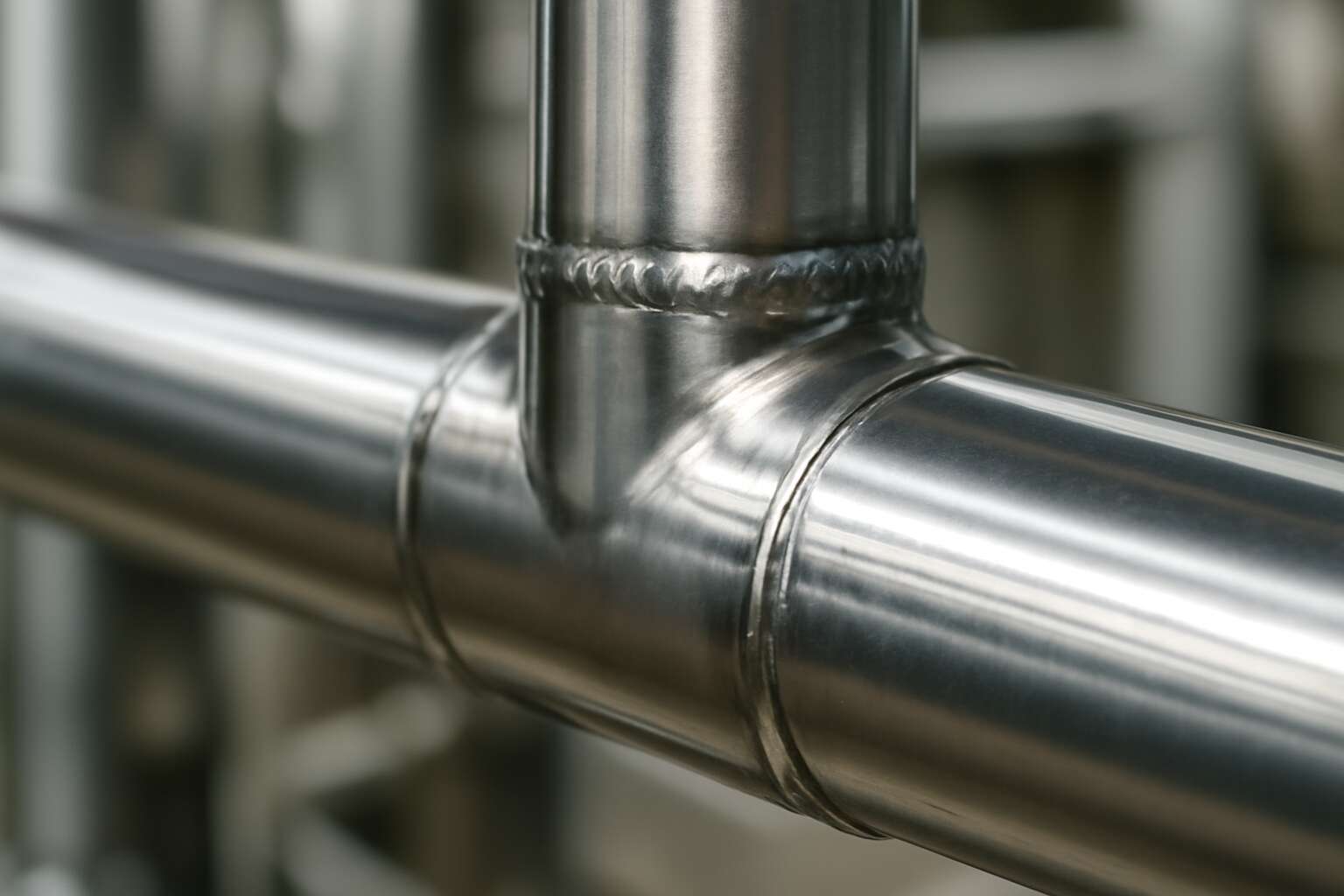
Stainless steel connection fundamentals
Materials and grades for stainless connections
Stainless connection fundamentals aren’t glamorous, but they’re the quiet heroes of robust systems. In South Africa’s coastal and mining landscapes, a stainless connection can endure heat, humidity, and a little sand in the gears. “Reliability beats flash,” as a veteran plant manager likes to say.
Materials and grades for stainless connections revolve around corrosion resistance, weld compatibility, and budget. The common choices are:
- 304/304L for everyday, cost-conscious runs
- 316/316L for salt-laden or coastal environments
- 347 or 316Ti for high-temperature or weld-heavy assemblies
Beyond grade, finish and fabrication affect performance. Cleanliness, passivation, and compatible gaskets keep the stainless connection performing through cycles of pressure and temperature—especially where water and minerals roam freely.
Threaded, welded, and clamp options
“Reliability beats flash,” a veteran plant manager likes to remind readers. In South Africa’s coastal heat, humidity, and sand, a stainless connection isn’t about shine—it’s about steady performance under pressure. When one compares threaded, welded, and clamp configurations, one glimpses different philosophies of strength: secure threads, clean welds, and gasket-friendly clamps that tolerate cycles without barking seals.
- Threaded connections
- Welded joints
- Clamp assemblies
Threaded routes offer quick maintenance and modularity, while welded paths reward with near-seamless strength; clamps deliver fast assemblies without heat-affected zones. In every case, cleanliness and compatible gaskets protect the stainless connection through temperature swings and mineral-rich water that SA plants routinely contend with.
Coatings and surface finishes for corrosion resistance
Coastal South Africa plants test metal in ways that dictators fear: salt, sun, sand, and relentless temperature swings. The stainless connection that finally survives is less about flash and more about the finish—surface chemistry that resists corrosion long after the factory glow fades.
Coatings and surface finishes do the real work. A subtly reduced roughness cuts micro-creep where chlorides linger, while passive films keep steel happy through cycles. Consider these options for durability:
- Electropolishing for a micro-smooth finish
- Passivation to enhance the chromium oxide layer
- Protective ceramic or PVD coatings for aggressive climates
A well-chosen combination protects metal from pitting and scale, giving maintenance teams a quieter shift and operators a steadier stream of uptime.
Standards and certifications relevant to stainless assemblies
A stainless connection is more than metal; it’s a pact hammered out in standards and patience. In coastal factories where salt air gnaws at certainty, the true strength lies in certification and consistent workmanship. As one veteran engineer notes, “The weaker link is the one without proper validation”—and that goes double for assemblies.
- ISO 9001 quality management for traceability and consistency
- ASTM/ASME material and welding standards for stainless products
- AWS stainless welding codes for robust joints
- SABS/SANS alignment to South Africa-specific requirements
When the right standards align with a stainless connection, the plant hums with quiet integrity.
Design considerations for stainless steel connections
Load transfer and fastener selection
Coastal winds, salt spray, and relentless sun—South Africa’s built environment faces a ruthless test. A well-chosen stainless connection doesn’t merely join steel; it preserves memory and character, standing sentinel for decades.
Design considerations center on the load transfer path and the harmony between members. Clear load paths reduce unexpected bending moments, while fastener selection—balance of material, strength, and compatibility—ensures enduring clamping when cycles of heat and vibration arrive with the tide. The stainless connection becomes a quiet backbone.
Key considerations include:
- Clean load paths and self-aligning joints to minimize stress concentrations.
- Material compatibility and fastener grades to resist galvanic corrosion across dissimilar metals.
- Appropriate torque and mounting allowances to maintain consistent clamping under dynamic loads.
A glance at a coastal skyline at dusk reveals how durable joints translate into long-term value, letting structures breathe with the wind and sunlight.
Finite element and analytical modeling basics
Coastal winds and relentless sun quarrel at the hinge of every South Africa structure. A stainless connection carries decades of memory, and its strength begins with a bold design creed: the wind tells a story the eye cannot see.
Finite element and analytical modeling basics illuminate how load paths weave through joints. Consider mesh density, boundary conditions, and contact interactions; these elements keep stress concentrations honest and guide choices without guesswork. Modelers also track material nonlinearity and temperature effects to forecast the stainless connection’s performance under sea-salt cycles.
From theory to practice, this science translates into joints that endure with grace. The stainless connection becomes a quiet backbone, letting structures breathe with wind and sun while time does the rest.
Thermal expansion and gasket compatibility
Coastal South Africa bites with wind and sun, and a stainless connection holds the line where others falter. Joints must breathe with temperature swings because a seal that can adapt ages better than one that stays rigid. As one engineer puts it, the seal wins the battle long before it fights the storm!
Design considerations for stainless connections include attention to thermal movement and gasket compatibility. The goal is a joint that seals reliably without over-constraining metal. Consider the following:
- Thermal expansion tolerance across joined components
- Gasket material compatibility with stainless grades and coastal salt exposure
- Seating surfaces, gapping, and flange finish to prevent galling
- Fastener choice and preload to withstand cyclic temperatures
- Maintenance access and inspection planning for long-term performance
With these factors in place, the stainless connection becomes a quiet backbone, enduring coastal climate while time does the rest. In a market where maintenance timetables meet budget cycles, robust joints matter.
Fatigue, vibration, and life expectancy
Fatigue isn’t a mood; it’s the quiet architect of failure in coastal climates, where salt spray and sun hammer metal into temptation! The design goal is to let joints breathe with cycles rather than grind under them, because the difference between life and downtime is often in how a connection yields to repetition.
Vibration from pumps, winds, or equipment can nudge a joint toward micro-miss alignment, accelerating wear and hiding corrosion fatigue in plain sight. Life expectancy hinges on a balance: enough preload to resist opening and enough compliance to absorb load swings without kink or crack. The stainless connection remains the hinge between weathered cycles and lasting service, a testament to tolerances that respect time rather than defy it.
Electrochemical considerations and galvanic corrosion prevention
Salt spray is a clock that never stops in coastal South Africa, and a stainless connection must keep perfect time. The right pairing, isolation, and thoughtful detailing turn potential corrosion into quiet endurance rather than a loud failure. “The strongest joints are those that yield to the weather,” a mentor once whispered.
Electrochemical considerations and galvanic corrosion prevention shape the design, not as a manual, but as a philosophy. In saline air, even noble metals must be mindful of dissimilar mates; compatibility, barriers, and climate-appropriate seals keep the stainless connection resilient.
- Material compatibility and galvanic awareness
- Isolation barriers between dissimilar metals
- Coatings and seals for coastal chlorides
- Environment monitoring and periodic inspection
These choices shape the electrochemical landscape, guiding longevity over compromise.
Installation and maintenance best practices
Surface preparation and cleanliness requirements
In South Africa’s demanding industrial environments, a well-prepared stainless connection performs like a quiet benchmark for reliability. A veteran fitter once reminded teams, ‘Cleanliness is a performance parameter’—and in those quiet moments, reliability blooms, the connection revealing a facility’s true integrity.
Surface preparation and cleanliness requirements shape leak resistance and longevity. Mating faces free of oils, dust, and fingerprints help the connection perform under South Africa’s challenging conditions. Contaminants and minor nicks can create micro-pits around joints, inviting corrosion over time.
After assembly, rigorous cleanliness remains essential; ongoing visual checks and proper storage safeguard long-term integrity of the connection.
Tightening torques, seals, and leak checks
In South Africa’s demanding plants, a stainless connection is more than metal—it is a covenant of reliability. A veteran fitter once said, “Clean faces and bolts whisper of long life.” That wisdom translates into fewer leaks and less downtime when installation discipline is applied!
For installation and maintenance, the emphasis shifts to tightening torques, seals, and leak checks—the insistence on precise control and consistency. Respect thermal motion, vibration, and pressure cycles, and treat the assembly as part of a living system. Ongoing visual checks safeguard long-term integrity.
- Gasket and seal compatibility with service fluids.
- Check mating faces for damage, dirt, and proper alignment.
- Schedule periodic visual and pressure-dependent leak checks to catch wear early.
Like any delicate instrument, this system thrives when care becomes a habit, not a ritual. When crews honor tightening, seals, and the quiet rhythm of maintenance, reliability blossoms even in the heat of South Africa’s industrial heart.
Inspection intervals and wear monitoring
South Africa’s plants crackle with energy, and a stainless connection isn’t just metal—it’s reliability wearing armour. The field favors installation discipline and a steady eye on performance data. Treat each joint as part of a living system, where clean faces and proper alignment quietly reward operators with fewer interruptions.
Best practice hinges on defined inspection intervals and wear monitoring. Track corrosion cues, joint movement, and fluid compatibility through history logs and trend analysis. When early signs appear, let data drive the cadence before faults bloom, and keep teams aligned with transparent reporting about the joint’s health.
Applications and industry use cases
Chemical processing and pharmaceutical facilities
In a sector where purity and uptime are measured in millions of rand, the stainless connection is more than hardware—it’s the quiet guarantor of process integrity.
For chemical processing and pharmaceutical facilities, it enables clean transfer, easy inspection, and reliable service in harsh environments.
- Sanitary valves and fittings
- Sampling manifolds
- Hygienic adapters and clamps
- Process connections for reactors and skid assemblies
From my experience in South Africa’s pharma landscape, choosing the right stainless system isn’t flashy, but it delivers leak-free joints, repeatable cleanliness, and long life in CIP/SIP cycles.
Food and beverage processing standards
In South Africa’s dynamic food and beverage landscape, uptime isn’t optional—it’s commercial chemistry. The stainless connection isn’t flash; it’s the clean transfer, reliable inspection, and leak-free peace of mind that keep lines running through CIP and SIP cycles. When purity matters, this hardware becomes a silent guarantor of process integrity across dairy, beverages, and packaged goods. Built to withstand caustic cleaners, high-temperature rinses, and the pace of modern lines, it reduces variability at the source and supports effortless audits. Dependable fittings also ease maintenance calendars and supplier audits.
Applications span multiple segments:
- Dairy processing and milk handling
- Brewing and beverage production
- Fruit juice and ready-food lines
In a market where standards and cleanliness define brand risk, lines stay productive and compliant.
Petrochemical and offshore environments
Downtime on offshore rigs can cost millions in South Africa. In harsh marine service, a single leak isn’t just bad—it’s costly. A reliable stainless connection matters. It stands up to salt spray, vibration, and thermal swings, keeping critical lines flowing from rig to plant.
Key use cases span offshore and onshore facilities. The following environments commonly rely on robust connections:
- Offshore platforms and FPSOs with high-pressure condensate and sour gas streams
- Refineries and petrochemical processing units operating under elevated temperatures
- Marine terminals and LNG facilities facing salt air and caustic cleaners
These fittings simplify audits and maintenance in challenging environments. For operators, this approach reduces corrosion risk and downtime.
Operators report smoother commissioning and fewer delays in the supply chain, thanks to robust fit-up and cleanable surfaces. In harsh marine service, you want fittings that don’t blink under pressure or salt spray!
Architectural and structural uses of stainless connections
In South Africa’s coastal skylines, a single brittle joint can ripple into months of downtime. “A solid connection is the quiet backbone of every structure,” says a veteran engineer.
Architectural and structural uses of stainless connections span resilient façades, stairways, and public spaces. They blend form with function, letting designers push bold shapes without sacrificing longevity in rugged environments. A stainless connection keeps form and function aligned as coastal structures rise.
- Curtain walls and mullions that resist salt spray along South Africa’s coast
- Public stairways and handrails requiring long-term hygiene and durability
- Marine-grade supports for bridges, piers, and waterfront facilities
Medical devices and cleanroom compliance
In South Africa’s high-stakes medical manufacturing, a single joint can ripple into downtime. Audits flag that roughly 28% of cleanroom nonconformities trace to joints and fasteners. A stainless connection offers quiet assurance behind sterile enclosures, resisting humidity, cleaning cycles, and salt exposure with confidence.
Applications in medical devices and cleanrooms demand hygiene, durability, and dependable seals. The stainless connection preserves sterile interfaces, supports precision components in humid environments, and endures repeated sterilization cycles without pitting. For housings, filtration assemblies, and equipment mounts, it keeps form and function aligned under pressure.
- Sanitary fittings and clamps for sterile fluid paths
- Cleanable fasteners and supports for biosafety cabinets
- Corrosion-resistant housings and brackets for instrument enclosures
Across South Africa’s labs and clinics, the prestige of a well-chosen stainless connection translates to safer, steadier operations and fewer interruptions!
Repair, retrofits, and lifecycle cost considerations
In South Africa’s high-stakes medical manufacturing, a single joint can halt a line and compromise patient safety! Audits show up to 28% of cleanroom nonconformities trace to joints and fasteners. It acts as a quiet guardian, resisting humidity, cleaning cycles, and salt exposure while keeping sterile interfaces intact.
A robust stainless connection helps keep systems aligned, reducing downtime and total cost.
- Repair and retrofit options for devices and biosafety cabinets
- Lifecycle cost considerations: maintenance intervals, longer service life
- Qualification and cleaning validation for new joints



0 Comments