
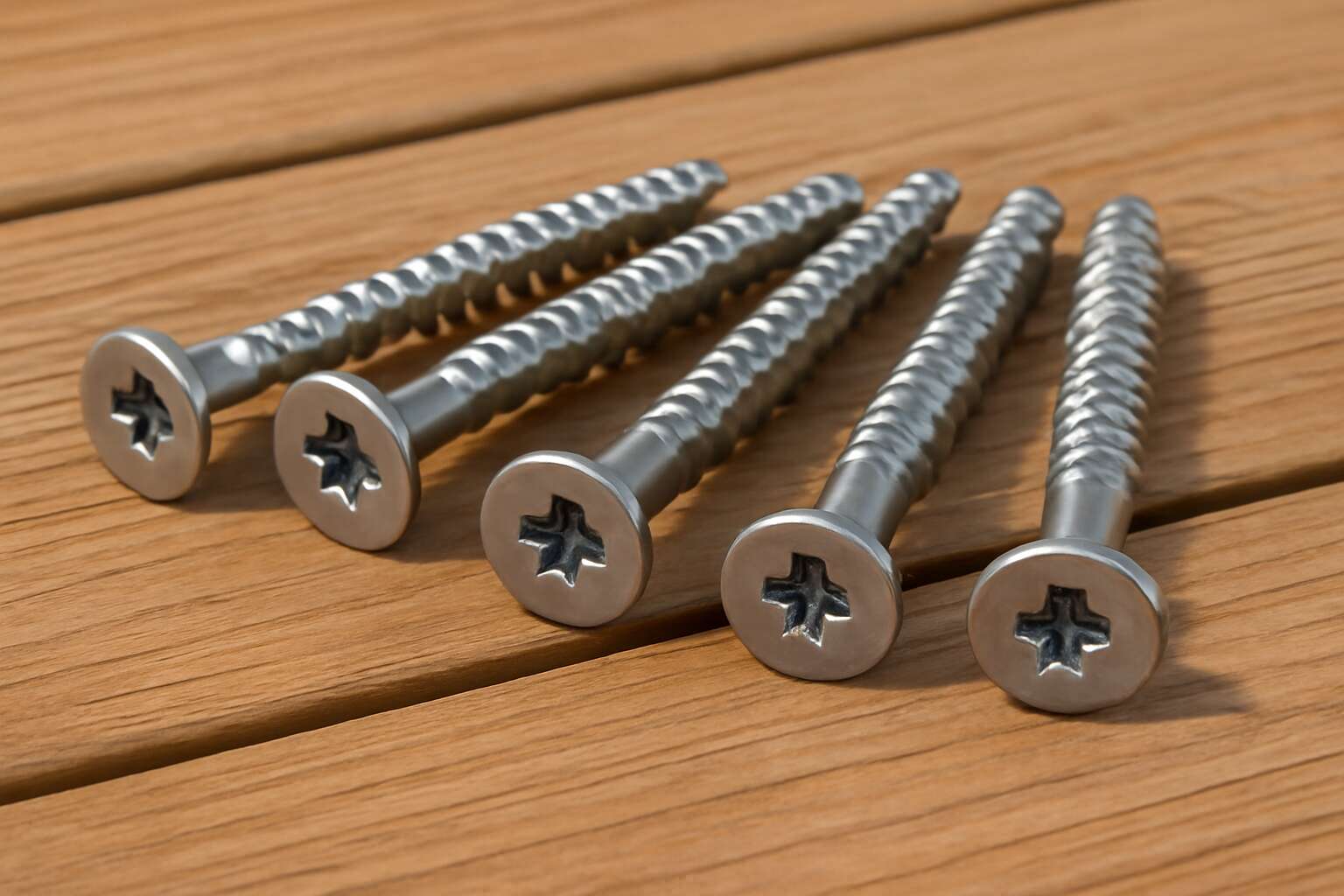
Understanding Stainless Steel Decking Screws
What Are Stainless Steel Decking Screws and How They Differ
Coastal decks in South Africa face sun, rain, and salt spray—and the right hardware can outlast the seasons. A striking 75% of local builders report longer deck life when using stainless steel decking screws, turning a simple choice into lasting peace of mind.
Understanding what these screws are and how they differ starts with their composition. Stainless steel decking screws come in grades like 304 and 316; the latter offers stronger corrosion resistance in salty coastal air. They outperform galvanized or carbon steel fasteners, preserving bite and aesthetics.
- Superior corrosion resistance in coastal SA environments
- Reliable holding power for timber and composites
- Compatibility with concealed or exposed fastener systems
Compared with standard screws, stainless steel decking screws keep decks tighter and cleaner over time. They blend function with a touch of elegance, a quiet reminder that durable hardware can be a storyteller for your outdoor spaces.
A2 vs A4 Stainless Steels for Stainless Steel Decking Screws
A striking statistic anchors this topic: 75% of coastal builders report longer deck life when using stainless steel decking screws. The A2 vs A4 choice hinges on SA coastal conditions.
A2-grade screws (304) offer steady corrosion resistance at a friendlier price; A4 (316) delivers superior salt spray resistance, ideal for seaside decks.
- A2 (304): good corrosion resistance; affordable
- A4 (316): elite salt spray resistance; coastal SA ready
The system you choose, whether concealed or exposed, shapes the deck’s lasting look and bite. Stainless steel decking screws keep performance steady while the surface keeps its quiet finish.
Overview of Head Styles for Decking Screws
Understanding stainless steel decking screws goes beyond hardware. It’s the quiet backbone of decks that endure heat, rain, and seaside air. In South Africa, coastal conditions demand more than a shiny finish; the head style and drive system influence seating and longevity. An overview of head styles for decking screws helps you choose with confidence, not guesswork.
- Countersunk/flat head: flush finish
- Bugle head: classic, strong seating
- Trim head: near-flush profile
- Torx/star drive: smooth driving, less cam-out
- Square drive (Robertson): resilient in tough conditions
Choosing a head style matters not just for looks but for how the screws bite and hold over years. With stainless steel decking screws, you’ll enjoy steadier performance and a longer quiet finish.
Thread Types and Their Role in Wood and Composite Decks
Thread choice can determine a deck’s fate more than most people admit. In South Africa’s coastal environments, heat, rain, and salt air test every fastener. A craftsman once said, “The bite matters more than the shine.” Understanding thread types helps you choose stainless steel decking screws that bite into wood and glide through composites, keeping surfaces true and maintenance light for years.
Thread types come in families that suit wood and composites alike. Consider these thread-type families:
- Coarse threads for softwoods: maximum bite, fewer splits
- Fine threads for hardwoods: steadier seating and shear strength
- Self-tapping, clean threads for composites: smoother driving, less mushrooming
Complimenting the right thread, stainless steel decking screws offer corrosion resistance that endures coastal humidity and heat. When the profile matches the deck—wood or composite—the fastener holds better, resists cam-out, and preserves the deck’s clean lines season after season.
Cost vs Performance: When to Invest in Stainless vs Other Options
Coastal South Africa tests every fastener with sun, salt, and wind, and your deck asks for more than charm! A single choice—stainless steel decking screws—can rewrite the lifespan of a boardwalk. The cost tag is a compass toward resilience when temperatures rise.
Investing comes down to balance: upfront expense versus long-term performance. In harsh coastal environments, longevity and maintenance savings often justify the premium.
- Upfront cost vs replacement cycles
- Corrosion resistance over decades
- Maintained aesthetics and true seating
Consider how your deck will live—timber, treated pine, or composite. The recipe for enduring beauty isn’t just material; it’s the fastener that keeps alignment true and corrosion at bay.
Material Grades and Corrosion Resistance
A2 vs A4 (316) Grade Differences for Decking Screws
Salt air doesn’t forgive, and on South Africa’s sunlit coasts, A4 (316) stainless steels stand as the quiet guardians of decks. For stainless steel decking screws, the choice between A2 and A4 is a weather-wisdom question. A2—typically 304-grade—delivers solid corrosion resistance in sheltered or inland settings, while A4’s molybdenum alloy shrugs off salt spray and chlorides with a gleaming calm.
- Corrosion resistance: A4 (316) outperforms A2 (304) in salt spray and chlorides.
- Cost and availability: A4 is usually more expensive.
- Environment fit: Coastal and outdoor decks benefit from A4; inland or sheltered settings may suffice with A2.
In the theater of deck design, stainless steel decking screws—the grade of metal becomes part of the landscape. Let the ocean’s memory guide your choice, and the timber and composite boards will sing in harmony under sun and shadow.
Coastal vs Inland Environments: Corrosion Considerations
Salt air never forgives. On South Africa’s coastline, decks endure a daily salt bath, and the elements know your screws by name. That’s why choosing stainless steel decking screws matters!
Material grades shape corrosion resistance in coastal versus inland settings. A4 (316) stainless steels shrug off salt spray and chlorides, while A2 (304) holds in sheltered inland decks. For stainless steel decking screws, the coastal choice often leans to A4, where the environment demands it.
Coastal environment considerations include:
- Salt spray intensity and humidity
- Chloride exposure from marine air
- Sun and temperature swings that affect coatings and finishes
Finish, Passivation, and Their Impact on Longevity
Dark skies over the coast stalk the deck with salt air—yet the guardians are stainless steel decking screws that refuse to rust. Material grades decide how long they keep their vow: higher-grade alloys form tougher shields against chlorides and humidity, while lesser grades cling for a season. Choosing the right screw is a quiet act of durability, not decay.
The shield is passivation—the chromium-oxide film that self-heals when salt tests it. This quiet science underpins lasting performance, where finish and microstructure meet in a disciplined embrace.
- Passivated surface fortifies the chromium-oxide layer for fewer attack sites
- Electro-polished finish smooths micro-crevices where salt hides
- Brushed satin finishes balance aesthetics with ongoing protection
In the end, stainless steel decking screws guard the deck’s story—quiet, persistent, and resilient under South Africa’s coastal sun!
Material Compatibility: Decking Substrates and Stainless Screws
Salt, sun, and humidity—the three variables that test any fastener—torment the South African coast with daily intensity. Material grades decide how bravely a fastener resists chloride and moisture, while substrate compatibility guides how long performance stays true. In the world of stainless steel decking screws, the right match keeps corrosion at bay and the deck singing through many seasons.
Different substrates call for careful pairing. The following partners often thrive with stainless steel decking screws:
- Hardwoods such as merbau
- Treated pine and other softwoods
- Composite decking substrates
For coastal projects, stainless steel decking screws deliver enduring protection across these substrates, weaving quiet resilience into every board and every breeze that sweeps the coast.
Installation Techniques and Best Practices
Selecting the Right Stainless Steel Decking Screws for Your Material
Deck longevity hinges on more than the look of the boards; it hinges on the choices beneath them. Stainless steel decking screws stand as quiet sentinels against salt air, sun, and seasonal humidity. The right screws ensure a clean, tight lay without staining or warping. In South Africa’s varied climates, installation technique and material compatibility matter as much as finish choices, shaping a deck that ages gracefully rather than succumbing to the elements.
Consider these high-level factors when pairing stainless steel decking screws with your deck material:
- Environment compatibility for coastal versus inland settings
- Substrate compatibility and wood grain considerations
- Head style aesthetics and flush appearance
- Finish, passivation, and longevity alignment
When used thoughtfully, stainless steel decking screws become a long-term ally, weaving durability with design—and a deck that invites lingering conversations as much as sunsets.
Pre-Drilling and Pilot Hole Guidelines
Across South Africa’s varied coastlines, a well-timed pilot hole can feel like a compass in a storm. “Let the pilot hole be your compass,” a veteran carpenter once said, and the deck remembers it. Stainless steel decking screws advance with a cleaner bite when the hole guides them, keeping boards aligned and stains at bay.
Pre-drilling is a quiet pact with the timber—it respects how wood moves and how grain carries the load. It reduces splits, avoids grain tear-out, and preserves flush aesthetics. For these screws, the right hole sets the stage for flawless insertion and enduring performance against salt air and humidity.
Driving Techniques to Avoid Stripping and Cupping
Staging your deck isn’t glamorous, but it’s where the project earns its stripes. “The drive is the heartbeat of a flawless deck,” as a veteran carpenter likes to say. With stainless steel decking screws, that heartbeat must stay steady and square against coastal winds.
Driving techniques to respect the timber hinge on balance, not brute force. For stainless steel decking screws, keep the drive system sharp and perpendicular, and favor a controlled cadence over speed to avoid slipping.
- Square alignment minimizes cam-out and cupping.
- Quality bits and driver compatibility prevent stripping.
- Steady, measured pressure protects the wood’s edge.
Across coastal builds, stainless steel decking screws stand up to salt air and humidity when the driving philosophy is patient and precise—results that finish flush and endure.
Hidden vs Visible Fasteners: Aesthetic and Functional Considerations
Coastal decks live and breathe with the breeze! A clean, uninterrupted surface matters more than flash. Hidden vs visible fasteners shape both look and life in timber, and stainless steel decking screws keep the surface true under salt spray and shifting boards.
- Hidden fasteners deliver a smooth, uninterrupted surface and easier sweeps of the plank tops.
- Visible screws provide quick checks for alignment and easier future maintenance.
- Head style and drive compatibility matter to prevent head damage and keep aesthetics intact.
In the end, installation choices should balance beauty with durability. Hidden setups emphasize a flush plane, while visible fasteners offer practical inspection. Either option hinges on the right stainless steel decking screws to endure harsh coastal conditions.
Sealing Heads and Protecting From Moisture
Coastal South Africa loves decks that breathe with the sea breeze; a flawless surface matters as much as the view. When you install with intent, stainless steel decking screws marry strength to beauty, resisting salt spray and shifting boards. The technique is not about force but finesse: a profile that sits true, a seal that keeps moisture at bay, and a profile that ages with the wood. In this realm, corrosion is the villain, and good fasteners are the shield.
- Keep heads sealed and flush to maintain a seamless plane.
- Pair the screws with a moisture-smart substrate and breathable finish.
- Schedule periodic inspections to catch anything early.
With stainless steel decking screws, you preserve the deck’s spell of grace while weathering coastal humidity. A quiet, durable performance waits in the quiet pull of a screw that simply holds its promise.
Maintenance, Longevity, and Replacement Strategies
Preventative Maintenance for Stainless Steel Decking Screws
Maintenance is the quiet guardian of a deck that stands the test of time. Regular inspections and expert assessments keep stainless steel decking screws performing as designed, preserving the structure against creeping corrosion, loose boards, and the subtle swelling that can disturb neat lines.
Longevity flourishes where environment meets care. In South Africa’s varied climate, with proper substrate pairing and steady maintenance, these fasteners retain their strength, resist discoloration, and sustain a clean, uniform appearance that reassures clients and architects alike, turning ordinary woodwork into lasting artistry.
Replacement strategies emerge from timely assessment rather than surprise. When inspections reveal the telltale signs, a considered plan keeps the project on track.
- Visible pitting or staining
- Looseness or head damage
- Discoloration near joints
Inspecting for Wear and Corrosion
Your deck endures because maintenance becomes daily ritual. Maintenance is the quiet guardian that keeps the shine of stainless steel decking screws intact amid South Africa’s sun and coastal air. This is not a sprint; it is stewardship—a steady rhythm that reveals wear long before it breaks a line.
Longevity grows where environment meets care. In South Africa’s varied climate, the right substrates and steady upkeep let fasteners resist discoloration and preserve a clean, confident board line, turning ordinary timber into lasting artistry.
Replacement strategies unfold from prudent assessment, not surprise. When the eye notices subtle signs—pit-like staining, looseness or head wear, or color shifts near joints—decisions align with the project’s narrative, not impulse.
- micro pits and staining signaling potential corrosion
- looseness or head wear compromising grip
- discoloration creeping near joints indicating wear risk
Replacement Guidelines and Recycling Options
Coastal South Africa decks endure sun and salt, yet stainless steel decking screws stay steadfast. Studies show these fasteners extend deck life by up to 60% in salty air. Maintenance becomes a quiet ritual that preserves shine and keeps boards singing under the horizon.
Longevity grows where environment meets care. In South Africa’s varied climate, substrates and steady upkeep help fasteners resist discoloration and maintain a clean, confident line, turning timber into lasting artistry.
Replacement Guidelines and Recycling Options for stainless steel decking screws become part of the poem. When looseness or color shift near joints appears, a prudent replacement fits the project’s narrative, not impulse. Recycling options close the loop, returning value to the coastal economy.
- Assess wear with quiet discipline, noting grip play and subtle signs of degradation.
- Verify substrate compatibility and choose a matching grade.
- Recycle through local scrap programs to minimize waste.
Long-Term Deck Integrity: Maintenance Schedule and Tips
Maintenance grows from habit into ritual, a quiet chorus that keeps the deck’s shine under the South African sun. With stainless steel decking screws as steadfast anchors, the timber breathes easy, and joints stay true as the horizon. A patient eye notices shifts and responds with care rather than haste!
Longevity arises where environment and care meet. The coastal climate, salt spray, and sun demand steady care; stainless steel decking screws resist corrosion, maintaining a clean, confident line. The more consistent the care, the longer boards sing and the deck endures beyond seasons.
Replacement strategies become chapters in a living poem of craftsmanship. When looseness or color drift near joints appears, a measured replacement fits the project’s narrative, not impulse. Recycling options close the loop, returning value to the coastal economy, renewing the strand that binds your outdoor stage.


0 Comments