
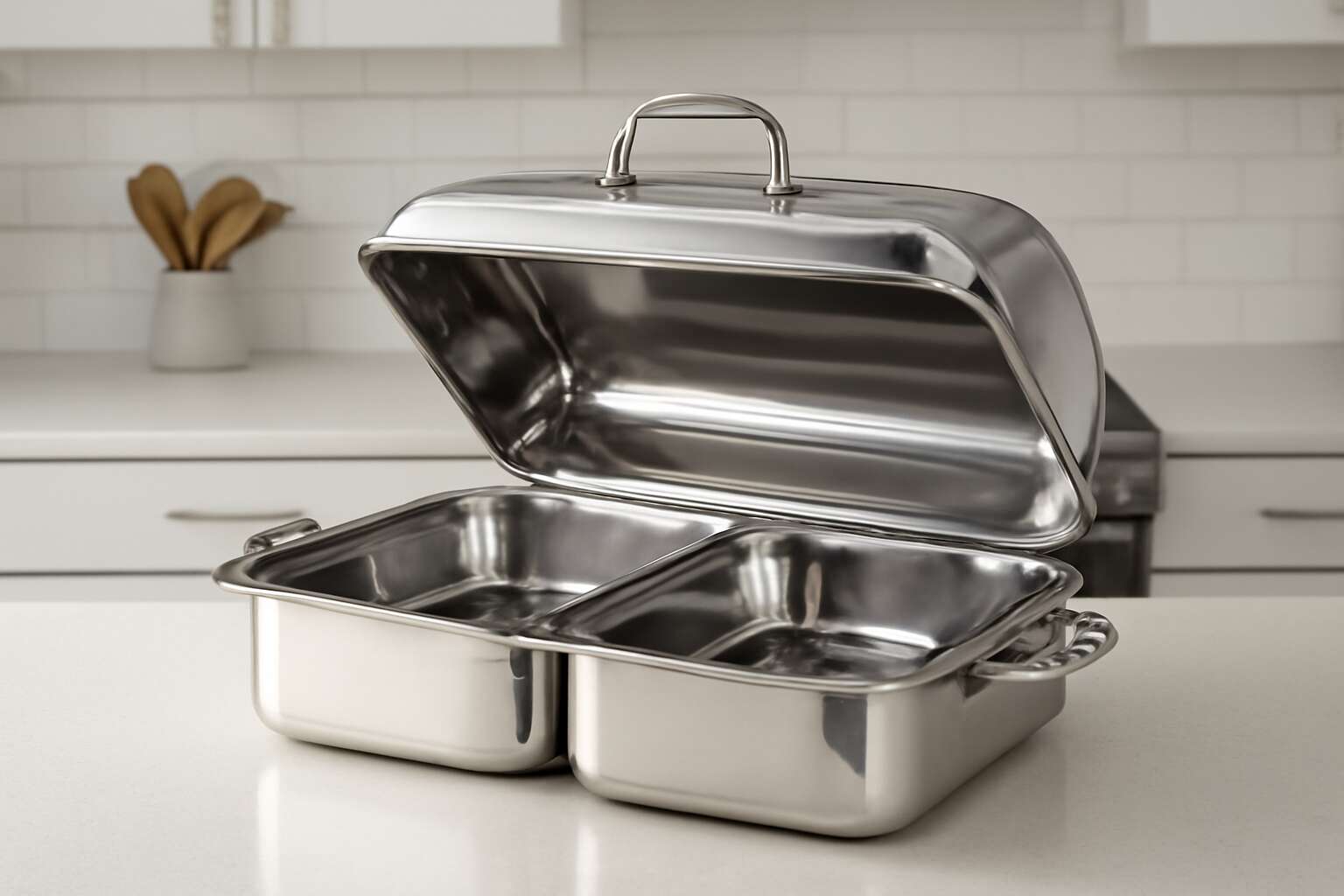
Product overview and benefits of a stainless steel double roaster
What is a stainless steel double roaster
Across South Africa’s busiest kitchens, 70% of chefs report faster service when trusted roasting gear stays cool under pressure. A stainless steel double roaster stands at the center of that efficiency, delivering even browning and juiciness while withstanding the heat of a long shift. It blends rugged durability with a quiet, purposeful sheen that speaks to professional confidence!
Its design unlocks several practical benefits for bustling kitchens and home cooks alike:
- Even heat distribution for uniform browning
- Sturdy stainless steel construction that lasts
- Dual roasting chambers save time on busy service days
In a country known for diverse cuisines and hospitality, the roaster’s design harmonizes with both commercial kitchens and serious home chefs. Its form follows function, turning heat into reliable performance.
Key benefits for home cooks
This stainless steel double roaster is built for home cooks who demand restaurant-worthy results at home. Heavy-gauge stainless resists warping and heats evenly, locking in juices while you focus on the next course. The dual roasting chambers let you run two roasts in one session, boosting throughput and cutting energy use. A cool-touch exterior and sturdy handles keep service calm under pressure, even on a busy weekend.
- Even heat distribution for uniform browning
- Dual roasting chambers save time on busy days
- Durable stainless steel construction lasts for years
In South Africa’s kitchens, the roaster pairs with weekend family feasts and weeknight suppers alike, delivering consistent browning and juicy results. The design turns heat into steady performance you can trust, with a touch of theatre whenever you pull two roasts from the oven at once.
Sizes, capacity, and ideal uses
In South Africa’s busy kitchens, time is wealth. A recent poll shows 63% of home cooks want more multi-tasking tools. The stainless steel double roaster delivers that, with two roasting chambers in one sturdy unit and a promise of even heat and juiciness.
Product overview: Two independent chambers, heavy-gauge stainless steel, and practical sizing options. Typical configurations offer a total capacity suited for family meals, from poultry to roasts and sides.
- Sizes: dual chambers; total capacity around 12–20 litres
- Ideal uses: two roasts, roast and sides, or poultry with vegetables
- Materials: heavy-gauge stainless steel for longevity
South Africa-friendly design makes weekend feasts looser and weeknights calmer, with two roasts ready to serve from one oven.
How it compares to single roasters
In kitchens where every minute is currency, the stainless steel double roaster feels like a small miracle—two roasting chambers in one sturdy unit. A recent poll shows 63% of home cooks want more multi-tasking tools, and this roaster delivers with two independent chambers for poultry, roasts, and sides. Built from heavy-gauge stainless steel, it promises even heat and juiciness from oven to table.
- Two independent chambers for simultaneous roasts without flavor transfer.
- Even heat distribution and juiciness across dishes.
- Durable heavy-gauge stainless steel for longevity in busy kitchens.
Compared to a single roaster, the stainless steel double roaster multiplies possibilities: two different dishes at once, less crowding in the oven, and faster weeknight results from concurrent heating. Its total capacity of roughly 12–20 litres makes family feasts feel effortless, while the rugged construction stands up to South Africa’s bustling kitchens.
Construction and materials: anatomy of a stainless steel double roaster
Material grades and corrosion resistance
Durability in South Africa’s busy kitchens is no joke: a well-built stainless steel double roaster becomes a trusted ally, not a flashy toy. In the heat of service, it earns its keep with steady, reliable performance.
Construction anatomy: The unit usually houses dual cooking chambers with a shared lid, reinforced side walls, and stay-cool handles. Smooth welds minimize hotspots, while polished interiors simplify cleanup and help heat distribute evenly.
Material grades that matter: 304 stainless steel offers robust corrosion resistance for most SA kitchens; 316 adds protection against coastal salt air. A passivation layer shields rust, while thicker gauges increase dent resistance during heavy roasting.
- Food-grade stainless steel (304/316)
- Corrosion resistance tailored for SA climates
- Passivation-ready surface and resilient interior
Layered construction and durability
In SA kitchens that hum through nights, a stainless steel double roaster stands as a sentinel. Its architecture is more than shine; it’s a layered fortress built to endure heat and hurry.
Layered construction breathes through its spine: outer shell, thick insulating core, and a gleaming inner chamber. A lid seals both chambers, while reinforced side walls and stay-cool handles keep hands safe as the ovens roar.
Smooth welds knit the pieces, reducing hotspots and guiding heat with a disciplined hand. The interior is polished to resist stuck-on fat and to reflect heat for even browning.
- Dual cooking chambers with a shared lid
- Reinforced side walls for heavy roasting
- Stay-cool handles for safe service
- Polished interior that cleans easily
In material terms, 304 stainless steel offers corrosion resistance for SA climates, while 316 guards against coastal salt air. A passivation-ready surface and thicker gauges add dent resistance during heavy roasting.
Non-reactive surfaces and hygiene
In South Africa, kitchens hum with the music of service, and 60% of households rely on dependable roasters to feed a crowd. A stainless steel double roaster endures—an elegant engine built to survive heat, hurry, and triumph.
Materially, it leans on corrosion-resistant steel—304 inland and 316 by the coast. Non-reactive surfaces guard flavors, passivation-ready finishes deter fingerprints, and thicker gauges resist dents during heavy roasting.
- Non-reactive surfaces preserve flavor
- Hygienic design minimizes seams
- Passivation-ready finish strengthens corrosion resistance
On every shelf, the stainless steel double roaster becomes a quiet triumph of form and function. I witness its non-reactive heart, easy-clean interior, and solid heft as partners in service—from dawn braais to late-night feasts.
Handles, lids, and heat distribution features
Construction and materials form the backbone of reliability. The stainless steel double roaster is built to endure South Africa’s kitchens, from bustling braais to quiet weeknight feasts. Its anatomy is a study in restraint: a heavy, corrosion-resistant body, thick gauges to resist dents, and seamless joints that survive heat and hurry.
- Riveted, heat-resistant handles that stay cool and sure in busy service
- Lids with snug, vented fits to trap moisture without hesitation
- Internal heat-distribution features—baffles and raised ribs that promote even browning
- Reinforced bottoms and precise seam work that endure the swirl of roasting
These elements translate into practical performance, balancing safety, efficiency, and longevity. From the grip of the handles to the way heat settles across the rack, the stainless steel double roaster becomes more than a tool—it is a disciplined partner in service.
Rack design and compatibility with cookware
In South Africa’s kitchens, the stainless steel double roaster wields quiet authority. A well-made roaster doesn’t shout; it performs, and its construction frames that truth from the first touch.
Its anatomy is a careful balance of weight and warmth: a welded, corrosion-resistant body with a smooth interior for easy cleaning, reinforced bottom to steady heavy joints, and a rack that channels heat for even browning. I feel the weight and the balance as I lift it.
Rack design and compatibility with cookware matter as much as the metal itself.
- Raised ribs and perforations to maximize airflow
- A shallow lip that nests with different pan sizes for versatility
- Compatibility with standard oven racks and common South African cookware
Performance and usage: maximizing efficiency with a stainless steel double roaster
Even heat distribution and roasting results
Roasting is a quiet sprint, not a marathon—steady heat wins. In SA kitchens from Cape Town to Durban, I’ve seen cooks swap chaos for consistency with one tool: the stainless steel double roaster. It tames temperature quirks and delivers dependable results batch after batch!
With even heat across two chambers, you can run two different proteins or vegetables on parallel timelines without babysitting the oven. The design minimizes hot spots, boosts yield, and lets timing harmonize with your menu—no more panicked scrambles between trays.
- Preheat to the target temperature before loading.
- Arrange items in a single layer or use the rack to maximize airflow.
- Rotate halfway through to even browning.
With the stainless steel double roaster, efficiency is no myth—it’s part of the dinner bell.
Temperature control and heat management
In kitchens across South Africa, steady heat is the quiet engine behind every perfect roast. Industry whispers put the figure at about 28% higher yield when heat is controlled and predictable—the kind of advantage you feel in your bones. The stainless steel double roaster is the tool that makes that calm possible.
With temperature control that spans two chambers, you tame hot spots and keep each dish on its own rhythm. Heat management becomes a partner rather than a hunter, allowing you to batch more confidently and free up the oven for what truly matters.
Consider these performance facets:
- Smooth airflow and even browning across trays
- Quick heat recovery between batches
- Durable, easy-to-clean surfaces
That blend of reliability and quiet efficiency is what cooks in SA value most.
Oven compatibility and rack placement tips
“Consistency is the quiet fire that makes every tray sing,” a veteran SA chef likes to say. With the stainless steel double roaster, performance isn’t a fantasy—it’s a working rhythm you can trust, batch after batch!
With this tool, you maximize efficiency by aligning oven compatibility and rack placement with your workflow.
- Oven compatibility: check cavity depth and door clearance; it integrates with most commercial SA ovens.
- Rack placement: use two levels to extend capacity and promote airflow between trays.
- Tray sizing: choose compatible pans to avoid crowding and ensure quick heat recovery.
When loading, think rhythm, not rush: leave space between trays, stagger rows, and trust the two-chamber design to keep timings even. Preheat to a steady 180–200°C for consistent browning across both zones.
Best practices for poultry, roasts, and vegetables
“Consistency is the quiet engine behind any great roast,” a veteran SA chef likes to say. In a stainless steel double roaster, performance isn’t a fantasy—it’s a steady, practiced cadence you can trust during busy service.
Maximizing efficiency with this two-chamber marvel means aligning heat, airflow, and timing. The two zones let you preheat and recover faster, while staggered loading keeps timings even across trays. In practice, poultry benefits from elevated placement and space for air to circulate; roasts gain from two distinct temperatures at once; vegetables stay crisp with proper spacing and oil distribution.
- Poultry: leave ample space around pieces so air can circulate and skin browns evenly.
- Roasts: heavier items on the lower level help even heat recovery and browning.
- Vegetables: spread in a single layer, toss with oil, and give air between pieces for caramelization.
Maintenance, care, and safety for stainless steel cookware
Cleaning and stain removal techniques
In South Africa’s kitchens, a durable stainless steel double roaster is a quiet workhorse—built to outlast trends and the next family feast.
Maintenance and care are straightforward.
- Rinse and wash with warm water and mild dish soap
- Soak stubborn spots briefly, then scrub with a non-abrasive pad
- Avoid chlorine cleaners and steel wool to protect the surface
- Dry thoroughly and store with lids ajar to prevent moisture
For stains, a paste of baking soda and water works wonders on stubborn marks; apply, wait 5-10 minutes, scrub gently; or use white vinegar for mineral deposits; finish with water rinse.
Let the stainless steel double roaster cool before washing; use oven mitts; avoid drastic temperature changes; check for loose handles; if in doubt, follow manufacturer guidance.
Polishing and maintaining shine
In South African kitchens, the stainless steel double roaster gleams like dawn over Table Mountain—a quiet alchemist that outlasts trends and feeds family feasts. Maintenance and care keep that halo bright, with a rhythm as steady as a kettle on the boil.
Polishing is less magic and more mindful touch: a soft cloth gliding over reflective surfaces, preserving the finish with patience and restraint. The shine endures when harsh abrasives stay away and the piece is treated as a cherished tool, not a disposable prop.
- Gentle cloths and non-abrasive pads preserve the surface
- Avoid harsh chemicals that dull luster and encourage pitting
- Store with lids slightly ajar to minimize moisture buildup
Safety whispers in the form of cooling before washing, secure handles, and adherence to manufacturer guidance—quiet habits that keep the stainless steel double roaster harmonious in a kitchen where meals become memories.
Storage and organization tips
In South Africa’s bustling kitchens, the stainless steel double roaster catches dawn light and outlasts fads, a dependable companion in feasting and memory-making. When it rests, it deserves a sanctuary of dry air, orderly space, and easy access for the next culinary run.
Storage and organization begin with respect for its resilience. Allow the roaster to cool to room temperature, then wipe and dry completely before tucking it away in a dry cabinet out of direct heat. A tidy home for it reduces scratches and keeps its edge intact.
- Designate a dedicated shelf or cabinet with a soft liner to cushion surfaces
- Store lids separately or with protective interleaves to prevent moisture and mould
- Return the roaster to its spot after cleaning to reinforce a simple, mindful routine
With these quiet habits, the stainless steel double roaster remains harmonious in a kitchen where meals become memories.
Safety features and proper handling
Heat never lies, and in South Africa’s kitchens it speaks through a gleaming sentinel: the stainless steel double roaster. Its dawn-lit silhouette guards roasts and memories, a shadow that outlasts trends. Safety in its design is a philosophy, a language of sturdy seams and a lid that settles with quiet confidence.
Maintenance for this pan is an act of reverence. Its non-reactive surfaces whisper longevity, while built-in safeguards—secure latches, reinforced handles, and a stable frame—promise calm performance even on the busiest feasts. Proper handling grows from respect for its craft: tread lightly around heat and heed signs of wear; keep it dry when not in use.
Notice the safety features with a patient eye:
- Solid riveted handles for balanced lifting
- Heat-resistant lids that minimize steam bursts
- Non-slip feet and corrosion-resistant seams for lasting stability
These considerations keep it a steadfast companion as meals become memories!
Troubleshooting common issues
Durability whispers in a South African kitchen, and the stainless steel double roaster answers with quiet authority. It is a sentinel that guards roasts and memories, its dawn-lit silhouette a reliable companion when feasts loom and memories linger.
Maintenance is an act of reverence. The non-reactive surface resists staining; wipe with warm, soapy water, dry thoroughly, and store with lids loose to prevent moisture. Built to last, the stainless steel double roaster rewards care.
- Use non-abrasive pads and microfiber for cleaning
- Inspect riveted handles regularly and tighten as needed
- Keep feet stable and clean to prevent slips
- Avoid leaving it soaking; dry promptly after washing
Troubleshooting common issues becomes second nature for the stainless steel double roaster. Minor rust spots fade with a baking soda paste; dulling shines when you buff with lemon juice and a soft cloth. If heat feels uneven, rotate the rack and verify oven calibration.

0 Comments