
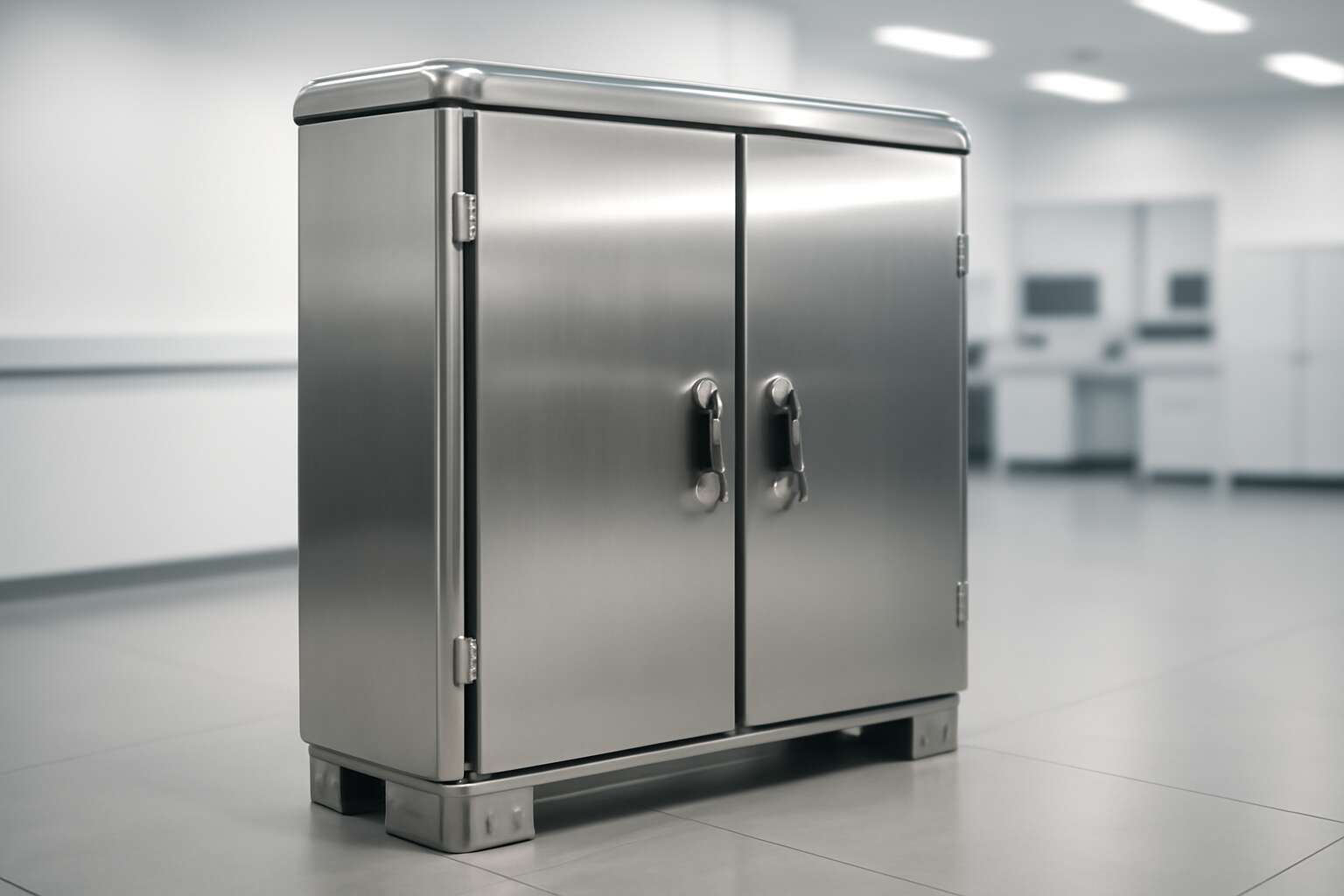
Overview of Stainless Steel Enclosures
Definition and Basic Features
In an era where durability and hygiene are paramount, stainless steel enclosures have emerged as the unsung heroes across diverse industries. Imagine a protective barrier that not only withstands the harshest environments but also maintains its sleek, corrosion-resistant surface—this is the essence of a stainless steel enclosure. Its robust construction ensures longevity, reducing maintenance costs and enhancing safety protocols in settings ranging from manufacturing plants to food processing facilities.
Fundamentally, a stainless steel enclosure combines form and function, characterized by its resistance to rust, ease of cleaning, and aesthetic appeal. Whether protecting sensitive electrical components or safeguarding critical instrumentation, these enclosures serve as a resilient shield against environmental factors and mechanical impacts. Notably, they are available in various configurations, including:
- Wall-mounted or freestanding designs
- Customizable dimensions to fit specific needs
- Multiple ingress protection (IP) ratings for different levels of environmental resistance
Such features underscore the versatility and importance of stainless steel enclosures in safeguarding vital equipment while maintaining operational integrity. Their straightforward yet sophisticated design exemplifies engineering that balances practicality with aesthetic appeal, making them indispensable in modern industrial landscapes.
Common Applications and Industries
Stainless steel enclosures have become an integral component across a vast array of industries in South Africa, where resilience and hygiene are not just preferences but necessities. These enclosures protect sensitive equipment from environmental stressors, ensuring operational stability in environments that demand high standards of safety and cleanliness. Their versatility makes them suitable for applications ranging from industrial automation to critical infrastructure management.
In manufacturing plants, stainless steel enclosures safeguard electrical controls and machinery, providing durability in the face of dust, chemicals, and mechanical impacts. Similarly, in food processing facilities, their corrosion resistance and ease of cleaning uphold stringent hygiene standards while protecting vital instrumentation. The adaptability of stainless steel enclosures is further exemplified through customizable dimensions and various ingress protection (IP) ratings, allowing precise tailoring to specific operational needs.
- Electrical control panels in industrial settings
- Protection of sensitive instrumentation in laboratories
- Enclosures for outdoor signage and lighting fixtures
Such applications highlight the essential role of stainless steel enclosures in maintaining safety, longevity, and efficiency. Their widespread use across industries underscores a universal truth: when it comes to safeguarding critical systems, resilience paired with aesthetic appeal is paramount. In South Africa’s dynamic industrial landscape, the stainless steel enclosure stands as a symbol of steadfast reliability and forward-thinking engineering.
Advantages of Using Stainless Steel
In a landscape where durability meets design, the stainless steel enclosure emerges as a paragon of resilience and sophistication. Its ability to withstand harsh environmental conditions—ranging from corrosive coastal air to abrasive industrial dust—makes it an indispensable component across South Africa’s diverse sectors. Unlike other materials, stainless steel offers a winning combination of strength and aesthetic appeal, ensuring that your equipment remains protected without compromising on visual integrity.
The advantages of using a stainless steel enclosure go beyond mere durability. Its inherent corrosion resistance reduces maintenance costs and extends the lifespan of critical systems. This long-term reliability translates into significant savings and peace of mind, especially in challenging settings like manufacturing plants or outdoor installations. Moreover, the versatility of stainless steel enclosures allows for customization in dimensions and ingress protection (IP) ratings, aligning perfectly with specific operational demands.
- Exceptional resistance to chemicals and environmental stressors
- Easy cleaning and hygiene maintenance, ideal for food processing or healthcare facilities
- Robust structural integrity that withstands mechanical impacts
This combination of resilience and adaptability makes the stainless steel enclosure more than just a protective shell; it’s a strategic choice for safeguarding sensitive equipment against the unpredictable forces of nature and industry. As South Africa’s industrial landscape continues to evolve, the stainless steel enclosure remains a steadfast symbol of quality and forward-thinking engineering, ensuring systems stay safe, efficient, and compliant with rising standards.
Types of Stainless Steel for Enclosures
304 Stainless Steel
Within the realm of stainless steel enclosures, the choice of material can be as pivotal as the design itself. Among the myriad of options, 304 stainless steel stands as a paragon of versatility and resilience, especially suited for demanding environments. Its corrosion resistance and aesthetic appeal have made it the material of choice for many industries seeking durability without sacrificing style.
What makes 304 stainless steel particularly compelling is its composition—primarily chromium and nickel—forming a protective barrier against oxidation and corrosion. This alloy’s innate strength and ease of fabrication have elevated it to a preferred standard in manufacturing stainless steel enclosures designed to withstand South Africa’s often harsh conditions.
For those considering the different types of stainless steel for enclosures, 304 stainless steel is often favored for its excellent formability and resistance to everyday wear and tear. Its adaptability ensures that whether used in food processing, telecommunications, or outdoor applications, the enclosure maintains integrity and appearance over time.
316 Stainless Steel
When venturing into the realm of stainless steel enclosures, the choice of alloy can be as mystical as selecting a hero for an epic quest. Among the pantheon of options, 316 stainless steel stands as a legendary guardian—resilient against the most treacherous elements that South Africa’s rugged landscapes can conjure. Renowned for its exceptional corrosion resistance, especially in saline or chloride-rich environments, 316 stainless steel enclosures are often heralded as the stalwart protectors of vital equipment.
This alloy’s secret lies in its composition—primarily chromium, nickel, and molybdenum—which forge an almost impenetrable barrier against oxidation and corrosion. It’s no wonder that industries spanning marine, chemical, and outdoor electrical applications favor 316 stainless steel enclosures for their enduring strength and pristine appearance.
- Superior corrosion resistance in harsh environments
- Unmatched durability in saline and chemical exposure
- Elegant, corrosion-resistant finish that retains its allure over time
In the quest to shield sensitive electronics and machinery, 316 stainless steel enclosures stand as an enduring testament to resilience—a true marvel in the saga of industrial protection. Their ability to withstand South Africa’s sometimes brutal climate makes them an essential choice for those who refuse to compromise on longevity and safety in their stainless steel enclosure solutions.
Other Variants and Their Uses
Beyond the formidable 316 stainless steel, other variants whisper their secrets in the shadows—each suited for a specific arc of the industrial spectrum. For those seeking versatility, 304 stainless steel enclosures emerge as the silent guardians of reliability, offering decent corrosion resistance in less aggressive environments. Its presence is widespread in food processing, medical equipment, and indoor electrical installations, where cleanliness and durability are paramount.
Then there’s the lesser-known but equally intriguing 430 stainless steel, a magnetic alloy celebrated for its affordability and moderate corrosion resistance. It finds its place in decorative applications and certain electrical enclosures where aesthetic appeal mingles with practicality. Each type of stainless steel enclosure is a testament to the alloy’s unique properties, woven into the fabric of industrial resilience.
For specialized needs, some manufacturers turn to duplex stainless steels—blending strength and corrosion resistance in a dark dance of alloys. These are especially vital in environments where chemicals and saline exposure threaten to erode even the sturdiest defenses. In this realm of shadowed strength, stainless steel enclosures become not just protectors, but silent sentinels standing against the relentless march of corrosion.
Design and Construction of Stainless Steel Enclosures
Material Thickness and Durability
In the realm of industrial design, the choice of material thickness in a stainless steel enclosure is more than mere preference; it is a profound statement about resilience and purpose. A thicker gauge of stainless steel not only enhances structural integrity but also transforms the enclosure into an almost indestructible fortress. When durability is paramount, especially in harsh environments, the material’s robustness becomes the silent guardian of sensitive components.
The construction of these enclosures is an exercise in precision, balancing weight with strength. For applications demanding maximum longevity, the use of high-grade stainless steel—such as 316 or specialized variants—ensures resistance to corrosion, impacts, and wear. The material’s inherent qualities mean it can withstand South Africa’s diverse climate challenges, from coastal humidity to desert dust storms.
In designing a stainless steel enclosure, considering the material thickness is crucial. It influences not only durability but also the ease of customization and maintenance. For instance, a well-thought-out construction, with appropriate thickness, guarantees that the enclosure remains resilient over decades, even under relentless operational demands. It’s not just about shielding electronics; it’s about creating a vessel of trust in environments where human safety and data integrity depend on unwavering strength.
Hinges, Locks, and Seals
When it comes to the design and construction of stainless steel enclosures, the devil truly is in the details—especially hinges, locks, and seals. These seemingly small components play a monumental role in safeguarding sensitive equipment while maintaining ease of access. Think of hinges as the joints in a well-oiled machine—smooth, durable, and capable of withstanding frequent use without squeaking or sagging.
Locks on a stainless steel enclosure aren’t just about security; they’re about peace of mind. High-quality locking mechanisms—whether padlocks, electronic, or combination—ensure that unauthorized personnel are kept at bay, especially in high-stakes environments. Meanwhile, seals act as the unsung heroes, providing weatherproofing that keeps dust, moisture, and even the relentless South African sun from sneaking inside.
For a truly robust stainless steel enclosure, consider the following:
- Corrosion-resistant hinges designed for harsh conditions
- Seals that are compatible with both high humidity and desert dust
- Locks that are tamper-proof yet straightforward to operate
The meticulous selection of these components ensures longevity, security, and a seamless user experience—no matter how tough the environment. After all, when the enclosure is the silent guardian of vital data or equipment, every detail counts.
Custom vs. Standard Sizes
In the realm of industrial protection, the design and construction of a stainless steel enclosure transcend mere functionality—they embody resilience, elegance, and longevity. While standard sizes serve many applications, the allure of custom-designed stainless steel enclosures lies in their ability to seamlessly integrate into unique environments, whether a compact control room or an expansive data center. Tailoring dimensions ensures a perfect fit, eliminating gaps and vulnerabilities that compromise security or environmental resistance.
Custom stainless steel enclosures offer a level of precision that standard sizes simply cannot match. From intricate internal configurations to specific mounting requirements, bespoke solutions are crafted to meet exacting specifications. Conversely, standard enclosures are readily available, cost-effective, and ideal for rapid deployment. When selecting between the two, consider factors such as the complexity of your equipment, environmental challenges, and aesthetic preferences. After all, every detail in a stainless steel enclosure can influence its ability to safeguard vital assets amidst South Africa’s diverse climate conditions.
Benefits of Stainless Steel Enclosures
Corrosion Resistance
In the realm of industrial design, few materials stand up to the test of time quite like stainless steel. Its exceptional corrosion resistance makes it a hero in environments where humidity, chemicals, and harsh weather are relentless foes. A stainless steel enclosure isn’t just a protective shell—it’s a fortress that guards sensitive electronics and machinery against the elements, ensuring longevity and reliability.
What truly sets a stainless steel enclosure apart is its ability to withstand corrosion without sacrificing aesthetic appeal or structural integrity. This durability is particularly vital in South Africa’s diverse climate, where coastal humidity and extreme temperatures can wreak havoc on lesser materials. By choosing a stainless steel enclosure, industries can dramatically reduce maintenance costs and downtime, all while maintaining a sleek, professional appearance.
Moreover, stainless steel’s resistance to corrosion extends to its ability to resist staining and rust, preserving the enclosure’s pristine look over many years. This resilience guarantees that vital equipment remains protected, even in the most challenging conditions. It’s no wonder that stainless steel enclosures are the preferred choice for applications demanding unmatched durability and corrosion resistance.
Ease of Maintenance
Stainless steel enclosures are renowned for their ease of maintenance, making them an ideal choice for demanding environments. Unlike other materials that may require frequent repainting or sealing, stainless steel naturally resists rust, staining, and corrosion. This means less time and effort spent on upkeep, allowing operations to run smoothly without interruptions.
Cleaning a stainless steel enclosure is straightforward. A simple wipe-down with a damp cloth or mild cleaner restores its sleek appearance, keeping it looking professional over years of service. Its smooth surface naturally resists dirt and grime buildup, reducing the need for harsh chemicals or abrasive scrubbing.
In addition, stainless steel enclosures are highly durable, standing up to extreme weather conditions common in South Africa. Their resilience minimizes maintenance costs and downtime. For industries seeking reliable protection that combines strength with minimal fuss, a stainless steel enclosure is an unbeatable solution.
Hygienic and Aesthetic Appeal
Stainless steel enclosures are not merely functional; they embody a sophisticated balance between form and function, elevating the visual appeal of any installation. Their sleek, polished surfaces exude a modern aesthetic that effortlessly complements both industrial and contemporary environments. This aesthetic appeal is not superficial—it’s a testament to the material’s ability to maintain its beauty over decades, resisting the corrosive elements so prevalent in South Africa’s diverse climate.
Beyond their visual charm, stainless steel enclosures also champion hygienic standards—an essential trait in sectors such as food processing, healthcare, and pharmaceutical industries. The smooth surface prevents bacteria buildup, making cleaning both quick and thorough. This hygienic advantage is complemented by the material’s innate resistance to staining and rust, ensuring that the enclosure remains pristine without constant maintenance or harsh chemicals.
In environments where appearance and hygiene are paramount, a stainless steel enclosure proves to be an investment in longevity and professionalism. Its resilient nature ensures it remains a visually appealing and hygienic solution, standing as a symbol of durability and aesthetic integrity in demanding settings.
Choosing the Right Stainless Steel Enclosure
Environmental Factors and IP Ratings
Choosing the right stainless steel enclosure involves more than just selecting a robust material; it requires a nuanced understanding of environmental factors and IP ratings. In South Africa’s diverse climate—ranging from humid coastal regions to arid inland areas—it’s vital to consider how local conditions influence corrosion resistance and longevity. An enclosure exposed to salty air, for instance, demands higher protection levels to prevent deterioration.
IP ratings serve as a crucial benchmark, determining the enclosure’s resistance to dust, water, and other environmental hazards. For outdoor applications, an IP66 or higher rating is often recommended, ensuring the enclosure remains sealed against the elements. When selecting a stainless steel enclosure, think about its environment—will it face abrasive dust, heavy rain, or chemical exposure? Understanding these factors helps in choosing the perfect enclosure that withstands South Africa’s unique climate challenges without compromising performance or integrity.
In essence, matching environmental conditions with appropriate IP ratings guarantees your stainless steel enclosure provides optimal protection, extending its lifespan and maintaining operational excellence in any setting. Whether for industrial, commercial, or specialized applications, this careful consideration is key to making a wise investment in durable, corrosion-resistant enclosure solutions.
Size and Mounting Options
Size matters—more than just in shoe shopping—the same rule applies when selecting a stainless steel enclosure. An enclosure that’s too small can turn your high-tech gadget into a claustrophobic nightmare, while one that’s too large might invite dust, moisture, and other unwelcome guests to party inside unchecked. Precision in sizing ensures optimal airflow, ease of maintenance, and enough room for future upgrades.
Mounting options are just as crucial—they determine how seamlessly your stainless steel enclosure integrates into its environment. Whether you prefer surface mounting for quick access or flush mounting for a sleek, minimalist look, choosing the right method can save headaches down the line. Think about the weight and vibration—some environments are more shake than bake—and select mounting hardware that keeps your enclosure rock solid.
Sometimes, it’s worth considering a custom-sized stainless steel enclosure, especially when standard options don’t quite fit the bill. A tailored fit guarantees that every bolt and screw is in its rightful place, reducing unnecessary stress and prolonging the lifespan of your investment.
- Assess your space constraints and future expansion plans.
- Match mounting options with environmental conditions—think corrosion-resistant brackets for coastal regions.
- Opt for an enclosure size that balances protection with practicality—more room means easier access and better airflow.
Cost Considerations
Choosing the right stainless steel enclosure doesn’t have to be a costly gamble. While premium materials like 316 stainless steel offer superior corrosion resistance—ideal for coastal or industrial environments—they come at a higher price point. It’s essential to weigh your specific needs against your budget, ensuring you don’t overspend on features that won’t benefit your application.
Cost considerations extend beyond the initial purchase. Think about installation, maintenance, and potential upgrades. A well-designed stainless steel enclosure can reduce long-term expenses by resisting rust, cracking, or warping, which are common issues in less durable materials. This longevity ultimately saves money and minimizes downtime.
For those balancing cost with performance, consider options like stainless steel variants that match your environmental conditions—such as 304 stainless steel for general use or 316 for harsher environments. Sometimes, a custom-sized stainless steel enclosure may seem like an added expense upfront, but it ensures optimal fit, reducing future modifications and associated costs. The right investment can turn your enclosure from a mere box into a reliable shield for your equipment—without breaking the bank.
Installation and Maintenance Tips
Proper Installation Practices
In the meticulous dance of installation, a stainless steel enclosure demands reverence and precision—each step a testament to durability and resilience. When mounting these enclosures, envision them as the sturdy heart of your operation, standing sentinel against the elements while safeguarding vital components. Proper installation practices are the bedrock upon which their longevity rests, transforming raw material into an unyielding fortress.
To ensure your stainless steel enclosure performs flawlessly, consider these essential practices:
- Secure mounting points with corrosion-resistant fasteners—vital in South Africa’s diverse climate.
- Maintain alignment and levelness, avoiding undue stress that could compromise seals or hinges.
- Implement sealing techniques that preserve IP ratings, especially in environments prone to moisture or dust.
Regular maintenance is equally vital—clean with non-abrasive solutions, inspect for signs of wear, and tighten fittings as needed. A well-maintained stainless steel enclosure is not just a protective shell but a silent guardian, standing resilient against the passage of time and nature’s whimsy. Remember, the true strength of an enclosure lies not only in its material but in how it’s cared for—ensuring your investment remains a beacon of robustness and reliability.
Cleaning and Care
A stainless steel enclosure is more than just a protective shell; it’s a resilient bastion that demands attentive care to maintain its formidable strength. Regular cleaning and careful inspection are essential to preserve its corrosion resistance and aesthetic appeal, especially in South Africa’s diverse climate where moisture, dust, and temperature fluctuations pose constant challenges. A clean, well-maintained stainless steel enclosure not only looks professional but also extends its lifespan, ensuring reliable operation over many years.
To keep your stainless steel enclosure in peak condition, use gentle, non-abrasive cleaning solutions that won’t scratch or degrade the surface. Wiping down regularly removes dust, grime, and corrosive residues, which can accelerate deterioration if left unchecked. For tougher stains or mineral deposits, a mixture of mild detergent and warm water often suffices—avoid harsh chemicals that could compromise the material’s integrity.
In addition to cleaning, routine checks of hinges, locks, and seals can prevent unforeseen failures. Tightening fittings and replacing worn seals help maintain the enclosure’s IP ratings, especially in environments prone to moisture or dust. Employing these simple maintenance practices transforms a stainless steel enclosure from a mere component into a steadfast guardian of your critical equipment, ready to withstand the relentless passage of time and nature’s whims.
Troubleshooting Common Issues
Installing a stainless steel enclosure isn’t just about fitting a sturdy shell around your critical equipment; it’s about ensuring longevity and resilience in South Africa’s unpredictable climate. Proper installation lays the groundwork for trouble-free operation, especially in harsh environments where moisture, dust, and temperature swings are common. When mounting your stainless steel enclosure, verify that it’s securely anchored to a stable surface, preventing movement that could compromise seals or structural integrity.
Sometimes, despite careful installation, issues can arise. Troubleshooting common problems often involves inspecting hinges, locks, and seals for wear or damage. Loose fittings or degraded seals can allow dust infiltration or moisture ingress, threatening the enclosure’s performance. Regularly checking these components helps maintain the enclosure’s IP rating and prevents costly repairs down the line. Remember, a well-maintained stainless steel enclosure acts as a reliable guardian—it’s worth the effort to keep it in peak condition!
- Check for any signs of corrosion or surface damage that could weaken the enclosure’s protective barrier.
- Ensure all hinges and locks operate smoothly without excessive force, replacing worn parts promptly.
- Verify that seals are intact and properly seated, especially after extreme weather conditions.
Future Trends in Stainless Steel Enclosure Technology
Innovations in Materials
As the world advances, so does the landscape of stainless steel enclosure technology, driven by innovations in materials that promise unparalleled resilience and adaptability. The future beckons with the integration of cutting-edge alloys and composites, designed to withstand the harshest environmental conditions—especially vital in South Africa’s diverse climate zones. Manufacturers are exploring advanced stainless steel grades that offer enhanced corrosion resistance, even in the most saline or acidic environments.
Emerging trends include the development of multilayered coatings and hybrid materials that blend stainless steel with other resilient substances. These innovations not only extend the lifespan of the stainless steel enclosure but also open doors to sleek, lightweight designs that do not compromise strength. As sustainability becomes a cornerstone, recycled and eco-friendly stainless steel variants are gaining prominence, aligning with global efforts to reduce environmental impact.
- Enhanced durability through nanotechnology coatings
- Improved corrosion resistance tailored for coastal environments
- Lightweight alloys for easier installation and maintenance
Such advancements are shaping a future where stainless steel enclosure solutions are more versatile, durable, and environmentally conscious—an elegant testament to human ingenuity and our relentless pursuit of perfection in design and function.
Smart and Connected Enclosures
As technology advances, the future of stainless steel enclosure solutions pivots towards smart, connected systems that seamlessly integrate with the digital world. Imagine enclosures that not only protect but also communicate—sending real-time data on environmental conditions, internal temperatures, or security breaches. This innovation transforms static barriers into intelligent guardians of sensitive equipment, especially vital in South Africa’s unpredictable climate zones.
Emerging trends include the incorporation of IoT-enabled sensors and wireless monitoring capabilities within stainless steel enclosures. These systems allow for proactive maintenance and heightened security, reducing downtime and operational costs. As the demand for smarter infrastructure grows, manufacturers are increasingly focusing on stainless steel enclosure designs that support remote diagnostics and automated alerts, ensuring optimal performance under diverse environmental factors.
- Real-time environmental monitoring
- Remote access for maintenance and control
- Enhanced security features with integrated sensors
This shift towards intelligent enclosures exemplifies the relentless pursuit of resilience and efficiency—pushing the boundaries of what a stainless steel enclosure can achieve in an interconnected world. It’s not merely about safeguarding assets but about creating a responsive ecosystem that adapts, learns, and evolves—an inspiring testament to innovation in stainless steel enclosure technology.
Sustainable Manufacturing Practices
As industries worldwide pivot toward sustainability, the future of stainless steel enclosure technology is embracing eco-conscious manufacturing practices that do not compromise durability or performance. Innovative techniques, such as recycled material use and energy-efficient production processes, are becoming standard, reducing the environmental footprint of these robust enclosures. Such advancements not only support global sustainability goals but also ensure that stainless steel enclosures remain resilient against South Africa’s diverse climate challenges.
Manufacturers are increasingly adopting green standards, ensuring that each stainless steel enclosure produced aligns with eco-friendly principles. This shift is vital in a world where environmental responsibility influences purchasing decisions. Furthermore, integrating sustainable practices into manufacturing can lead to cost savings and improved lifecycle performance, making these enclosures an intelligent choice for modern infrastructure projects.
Emerging trends include the development of more durable, lightweight stainless steel variants that reduce resource consumption without sacrificing strength. Additionally, some companies are investing in closed-loop production systems that minimize waste and emissions. As the demand for environmentally responsible solutions grows, the focus on sustainable manufacturing practices ensures that stainless steel enclosures remain both an eco-conscious and long-lasting asset for industries in South Africa and beyond.

0 Comments