
Overview and Importance of Stainless Fasteners
What are stainless bolts and where they are used
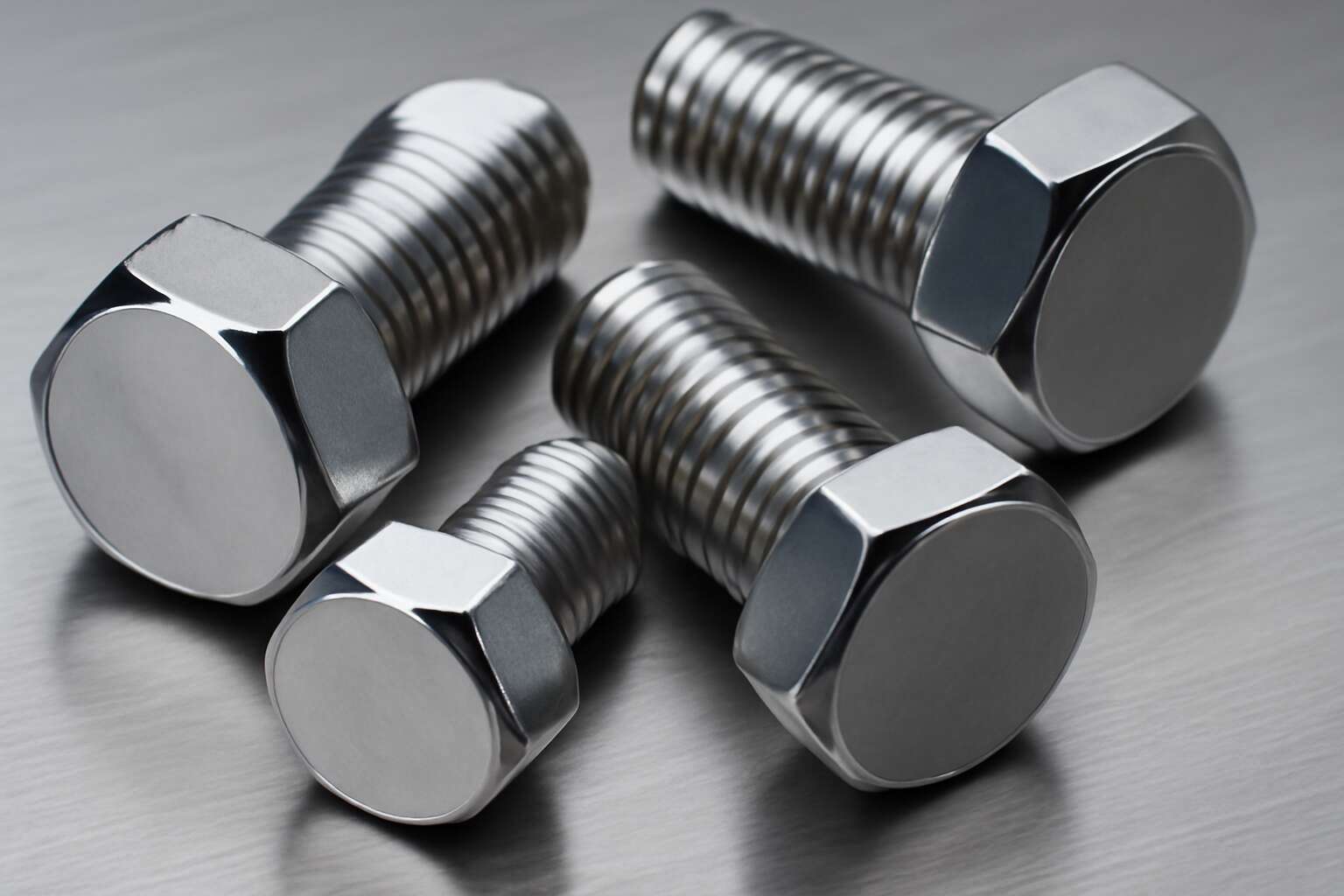
Stainless bolts are the quiet guardians of modern builds, forged from stainless steel to resist the creeping threat of rust. These bolts fuse strength with enduring corrosion resistance, keeping structures sound even when the elements press in.
In South Africa’s factories, farms, and coastal towns, the choice of these fasteners translates to less downtime and safer operations. The chromium-rich alloy forms a protective film that shrugs off salt spray, humidity, and chemicals, extending service life and margins.
Key areas where these fasteners excel:
- Marine and coastal structures facing salt spray
- Food processing and pharmaceutical equipment demanding cleanliness
- Industrial machinery and mining installations exposed to oils and abrasives
With locally available grades for stainless bolts and trusted suppliers, designers can confidently select the right option, balancing performance with cost and ensuring long-term reliability across South Africa’s diverse sites.
Key benefits: corrosion resistance, strength, durability
In coastal climates, corrosion can halve the life of ordinary bolts. Stainless bolts rise as quiet sentinels, blending strength with enduring corrosion resistance to keep structures standing when the wind bites and salt spray thickens the air.
Their core advantages rest on three pillars:
- Corrosion resistance that shrugs off salt spray and chemicals
- Exceptional strength to withstand vibrations and heavy loads
- Harsh-environment durability that reduces downtime and maintenance
Across South Africa’s factories, farms, and ports, these fasteners meet varied demands; designers can balance performance with cost, confident in locally available grades and trusted suppliers.
Common stainless steel grades used in bolts
Coastal SA operations confront salt spray daily; studies suggest salt exposure can cut bolt life by up to 50%. Stainless bolts provide a reliable line of defense—strong, stable, and resistant to corrosion in challenging environments. For coastal projects, stainless bolts are the quiet backbone!
Overview and importance: Their role goes beyond keeping pieces together. They maintain structural integrity under vibration, heat, and chemicals common in factories, mines, and ports. Selecting the right stainless bolts means balancing performance with cost while tapping into locally available grades.
- 304 stainless steel: versatile corrosion resistance, good for general use
- 316 stainless steel: superior salt spray resistance for coastal areas
- 410 stainless steel: hardened for shear and bearing loads
- 17-4PH stainless steel: high strength for critical joints
In South Africa, these grades anchor reliable supply chains through trusted suppliers.
Choosing grades for different environments
Coastal sites bite back at fasteners—the salt spray wears down metal fast. In demanding environments, an improper choice can cut bolt life by up to 50%. Stainless bolts stand as a quiet fortress—strong, stable, and relentlessly corrosion-resistant against the elements.
Overview and importance: They do more than join parts; they defend structural integrity under vibration, heat, and chemicals common in factories, mines, and ports. Choosing the right stainless bolts balances performance with cost while tapping into locally available grades.
Choosing grades for different environments is a careful art. In South Africa, trusted suppliers keep these grades within reach, supporting durable installations. Consider this quick guide:
- 316 for salt spray and coastal exposure
- 304 for general use and moderate corrosion resistance
- 410 for hardened bearing and shear loads
- 17-4PH for high-strength, critical joints
Industrial standards and certifications
Factories whisper with a weathered symphony; every bearing creaks, every joint keeps a memory. A recent audit reveals that up to 62% of unscheduled downtime begins with a compromised fastener. I know the ledger by heart: stainless strength offers a steadfast aerie—unassuming, but unwavering against salt, heat, and wear. They defend the rhythm of industry against time and vibration.
Industrial standards anchor trust. From QA laboratories to fatigue tests, certifications set the scale of reliability for stainless bolts.
- ISO 9001 Quality Management
- ASTM standards (F593, F594) for stainless fasteners
- SABS certification and South African standards
- EN/ISO environmental and performance benchmarks
Local South African suppliers keep pace with these frameworks, offering traceable origins and timely delivery. When standards guide practice, the fabric of infrastructure remains intact; neglect the standards, and even the strongest bolt may falter in the fierce bureaucracy of corrosion.
Materials and Grades for Stainless Bolts
A2 (304) and A4 (316) grades explained
In the workshop’s dim light, stainless bolts whisper of choices. A2 (304) offers a balanced alloy with good corrosion resistance and formability, ideal for indoor, dry environments and everyday fixtures.
- A2 (304): general-purpose, cost-effective, robust corrosion resistance for non-marine settings.
- A4 (316): added molybdenum, superior chloride resistance for coastal or chemical exposures.
- Choose A4 when humidity, sea air, or food processing environments loom.
In practice, these bolts endure temperatures and stresses differently; A2 favors livable interiors and light-duty cycles, while A4 bravely fends off chlorides and heat, preserving joints across harsher climates.
Other common grades: 303, 316L, 17-4 PH
In the workshop’s quiet corners, bolts carry stories of durability and precision. ‘Strength is kept by what lasts,’ I tell the team; I have seen them survive heat, salt, and time—these fasteners are more than metal; they are promises of steadfast performance in harsh climates.
Beyond the familiar A2 and A4, three other common grades often surface in South African work: 303, 316L, and 17-4 PH. Each wears a different mantle—machinability, corrosion resilience, and strength—yet all share one trait: they endure where others falter—an insight every SA workshop lives by.
For stainless bolts, these three grades offer a spectrum of strengths.
- 303: Free‑machining austenitic; easy to cut, good general corrosion resistance, not marine-grade.
- 316L: Low‑carbon 316; excellent chloride resistance and weldability; suited for coastal or chemical environments.
- 17‑4 PH: Precipitation-hardened; very high strength; good corrosion resistance, handles heat well.
Alloy content and corrosion resistance
In the quiet forge of South Africa’s coast and veld, stainless bolts wear a shield of chromium that keeps rust at bay. A minimum of 10.5% chromium forms that invisible armor, letting metal endure to time, not to salt and sun. The story is iron-bound and unyielding!
Beyond mere metal, the alloy content crafts resilience. Chromium forms the passive skin; nickel adds ductility; molybdenum thickens armor against chlorides. In practice, this trio tailors corrosion resistance and workability to your environment.
- Chromium for the passive film
- Nickel for toughness and formability
- Molybdenum for chloride resistance
In South Africa’s industries—mining, maritime, chemical processing—the right bolts survive heat, humidity, and salt air where others falter. Fasteners endure long after the paint on a vessel has chipped away; that quiet certainty is a compass for workshops!
Comparing stainless to carbon steel bolts
Stainless bolts stand as the quiet backbone of South Africa’s coastal industries. In salt air and sun, the right choice lasts longer and maintenance cycles shrink. Compared with carbon steel bolts, stainless bolts bring a built-in shield: chromium forms a passive film that resists rust, while nickel adds toughness and molybdenum fends off chloride attack. In practice, this trio keeps joints reliable through heat, humidity, and the bustling life of mines, marinas, and chemical plants.
Materials and grades map to environment and load. Stainless bolts often offer superior corrosion resistance even without coatings, while carbon steel relies on paint or plating for protection and may require more frequent replacement in harsh settings.
- Corrosion resistance in coastal and chemical environments for stainless bolts
- Formability, ductility, and load capacity
- Maintenance footprint and long-term durability
That balance helps South African workshops choose the right stainless bolts for every job.
Bolt Types and Features
Socket head, hex, and carriage bolts: key differences
In the realm of stainless bolts, the drive you choose can change the whole story of a project. Socket head, hex, and carriage bolts carve distinct paths for torque and fit—each suited to different spaces, loads, and aesthetics. In South Africa’s tough workshops and coastal zones, the right choice unlocks a quiet pact between metal and fit under pressure.
Consider how the bolt’s head and shank meet the material’s needs. The following differences guide the narrative:
- Socket head bolts: driven with an Allen key for high torque in tight spaces; heads sit flush in recessed connections.
- Hex bolts: classic external hex drive; versatile across structural and machinery applications; easier to inspect and replace.
- Carriage bolts: domed head with a square neck; resists rotation in through-holes, ideal for wood or metal-through assemblies.
Choosing bolts is less about trends and more about the stage they set—whether you need a clean, discrete profile or a robust, through-fastened joint that refuses to yield under load.
Coatings and finishes: passivation, PVD, and coatings
“The right coating writes longevity into every joint.” That truth reverberates through SA workshops where salt air and grit test metal daily—coatings becoming the invisible guard that preserves torque and fit. In this theatre, the bolt is more than steel; it is a story waiting to endure.
Coatings and finishes on stainless bolts shape their destiny. Passivation refreshes the protective chromium oxide film, while PVD forges a hard, slick face that resists wear. Modern finishes—epoxy, ceramic, or zinc-based—offer tailored protection and aesthetics without compromising strength or corrosion resistance.
For coastal environments and demanding equipment, choosing the right finish is as crucial as choosing the bolt itself. The following options are common companions to bolts:
- Passivation for corrosion-resistance fidelity.
- PVD for hard-wearing, decorative surfaces.
- Specialty coatings for UV, chemical, or salt spray exposure.
Head styles and drive options
Bolt decisions aren’t glamorous, but they’re not trivial either. The head style and drive option set the tone for install torque, seal integrity, and long-term reliability in any build. In a workshop, every turn tells a story of service life.
Here are the natural pairings you’ll actually reach for when you assemble with stainless bolts:
- Hex head
- Socket head cap
- Button head
- Flange head
Drive options include Allen/hex, Torx, Phillips, or slotted, chosen to fit your tools and space.
In coastal South Africa, the right head and drive combo matters as much as the alloy. Stainless bolts with the proper profile cut maintenance time, reduce risk, and keep assemblies torque-tight in salt spray and vibration.
Get the fit right, and the bolt does the heavy lifting while you enjoy coffee—the workshop waits for no one and neither should your torque.
Underheads and shank variants for specialty applications
“The torque you feel is the promise you keep.” In specialty assemblies, underhead geometry and shank variants determine life on the line for stainless bolts. A flush underhead prevents snagging, while a carefully milled neck supports precise alignment under vibration and salt spray. The right profile reduces seating stress and keeps threads healthier longer, even in coastal South Africa where the breeze carries salt and the morning heat bites!
- Fully threaded shanks for adjustability and clamp load
- Partial-thread shanks with a long grip for controlled load transfer
- Shouldered bolts for alignment in moving assemblies
- Grooved or relieved shanks to discourage rotation and shear
- Reduced-diameter or stepped shanks for clearance in tight bays
These bolt forms, when paired with appropriate head styles and drives, sustain torque-tight assemblies across harsh environments, making stainless bolts trusted partners in South Africa’s workshops and beyond.
Sizes, Threads, and Fit
Thread standards: UNC/UNF vs metric
Sizes govern how stainless bolts bite into assemblies, whether you’re fastening coastal equipment or mining gear inland. Imperial UNC/UNF threads use inches and coarser pitches, while metric threads read in millimeters with precise pitches. For a reliable fit, match diameter and pitch to avoid cross-threading.
Quick references for practice:
- UNC/UNF: inches-based; coarse 1/4-20, 5/16-18; fine 1/4-28, 5/16-24.
- Metric: M6x1.0, M8x1.25; tighter tolerances require matching pitch.
In fit terms, engagement depth and thread class matter, with coatings affecting ease of assembly. In South Africa, 304 and 316 stainless grades prevail where corrosion is a concern, always aligning size, pitch and class.
Choosing diameter, pitch, and length
Fit is where strength starts. A wrong diameter or pitch can wreck a project and cost downtime. Two thread worlds—imperial UNC/UNF and metric—mean you must match diameter, pitch and length for a reliable bite. When you size the bolt, you’re setting engagement depth and load path; a poor fit invites cross-threading and stubborn seizures. In coastal and mining environments across South Africa, precise fit isn’t optional—it’s essential.
Quick references you can rely on:
- UNC/UNF: inches-based; coarse 1/4-20, 5/16-18; fine 1/4-28, 5/16-24
- Metric: M6x1.0, M8x1.25; tighter tolerances require matching pitch
Also consider engagement depth and thread class, coatings and environment. For coastal SA, 304 and 316 stainless grades stay common, so length and class must match. stainless bolts perform best when size, pitch and finish align.
Thread quality and tolerance classes
Size and pitch decide the bite. A wrong diameter or mismatched pitch can derail a project and cost downtime. For stainless bolts, fit isn’t optional—it’s the first line of defense against cross-threading and seized fasteners. In coastal SA environments, engagement depth, length, and the load path all require exact sizing of diameter and pitch to keep joints reliable under sea air and salt spray.
- UNC/UNF: inches-based; coarse 1/4-20, 5/16-18; fine 1/4-28, 5/16-24
- Metric: M6x1.0, M8x1.25; tighter tolerances require matching pitch
Thread quality and tolerance classes turn sizing into dependable performance. Two thread worlds—UNC/UNF and metric—call for matching diameter, pitch, and length. In practice, imperial systems use 2A/2B classes; metric systems follow 6g/6H guidance. Tolerances set how snug the bite is; the right class prevents loosening while avoiding galling. Consider coating choice and environment to protect the engagement.
Compatibility with nuts and washers
Sizes decide the bite; the thread is the hinge on which every joint swings. For stainless bolts, precision in diameter and exact pitch—without them, you invite cross-threading and seized fasteners. In coastal SA environments, that precision keeps joints reliable under salt spray and sea air, where the load path demands a clean engagement. Two worlds—UNC/UNF and metric—still require matching diameter, pitch, and length to work in harmony.
Essentials for fit with nuts and washers include the following checks:
- Correct diameter and pitch alignment with the mating nut
- Washers sized to seat flush and distribute load
- Engagement length matches the bolt and joint requirements
When you align these details, you harness the true potential of these fasteners—robust, corrosion resistant, and dependable under demanding environments.
Common applications by size
Factories report up to 15% of assembly time is eaten by mismatched threads. When it comes to stainless bolts, diameter and pitch aren’t mere trivia—they’re the whole show. Get the right sizes, and joints glide; miss them, and you invite cross-threading, seized fasteners, and a grimace on the maintenance manual.
- M6–M8: light fixtures, electrical enclosures, and other compact assemblies where precision beats bulk.
- M10–M12: brackets and marine hardware in sheltered zones where corrosion resistance matters.
- 1/4″-20 to 3/8″-16 (UNC/UNF): general mechanical assemblies, brackets, and DIY jigs.
Engagement length must match the bolt, the joint, and the washer seating. In coastal SA settings, these bolts stay reliable when the fit is clean, giving you robust performance under salt spray and sea air.
Applications, Industry Use, and Sourcing
Industrial sectors: construction, automotive, marine
Environmental considerations and durability
In South Africa’s bustling workshops, stainless bolts quietly underwrite reliability, curbing downtime wherever salt air and sweat meet sheet metal. Downtime due to fastener failure costs SA industry millions annually. Their applications span kitchens, coastal plants, and mining facilities, where resistance to corrosion and heat keeps joints true long after the last meeting and the first cup of coffee.
Industry use in SA runs from mining and construction to marine engineering and food processing, where the balance of strength and corrosion resistance matters most. The right fasteners can mean fewer replacements, smoother maintenance, and clearer safety audits.
- Mining and mineral processing facilities
- Coastal construction and marine hardware
- Automotive assembly lines
- Food and beverage processing plants
Environmental considerations and durability: Sourcing responsibly matters—certifications, recycled content, and ethical milling support a smaller footprint. In coastal SA, humidity and salt exposure demand higher-grade stainless bolts and mindful maintenance to preserve longevity and performance.
Standards and certifications for suppliers
From rivulets of sweat in workshop floors to salt‑laden coastal breezes, stainless bolts stand as quiet guardians of integrity. In South Africa’s bustling industries, downtime costs millions, yet these fasteners keep joints true long after the last meeting and first cup of coffee!
Applications span the spectrum—from mining and mineral processing facilities to coastal construction, marine hardware, automotive assembly lines, and food and beverage processing plants. The choice of stainless bolts translates to longer service life and fewer interruptions during routine maintenance.
- Mining and mineral processing facilities
- Coastal construction and marine hardware
- Automotive assembly lines
- Food and beverage processing plants
Sourcing standards and certifications for stainless bolts emphasize traceability, ethical milling, and recycled content. Look for ISO 3506 and ISO 9001 certification, plus local SABS compliance for South African projects, to ensure performance and responsibility across the supply chain.
How to select reputable stainless bolt manufacturers
In South Africa’s 24/7 factories, downtime costs millions, yet stainless bolts keep joints true from dusty workshops to salt-laden harbours. These quiet guardians ensure performance when production never rests, turning potential chaos into a steady rhythm of reliability.
Applications span the spectrum, shaping strength for mining corridors, coastal structures, vehicle assembly, and beverage facilities. The right fastener translates to longer service life and fewer interruptions during routine maintenance, even amid grit, spray, and heat.
Sourcing is about assurance as much as alloy. To select reputable manufacturers, demand traceability, ethical milling, and recycled content. Seek ISO 3506 and ISO 9001 certifications, plus local SABS compliance to ensure performance across the supply chain.
- Traceability from mill to end user
- ISO 3506 and ISO 9001 certifications
- Local SABS compliance
Maintenance, replacement, and lifecycle costs
South Africa’s 24/7 factories don’t sleep, and every minute of downtime costs millions! Stainless bolts are the quiet custodians that keep joints true as grit, spray, and heat test them to the limit.
Applications span mining corridors, coastal structures, vehicle assembly, and beverage facilities, where reliability means longer service life and fewer disruptions during routine maintenance. These fasteners tolerate grit, salt, and heat without flaking, helping maintain consistent torque and clamp load across shifts.
Sourcing maintenance and lifecycle costs hinge on traceability and certification. For predictable budgets, demand traceability, recycled content, ISO 3506 and ISO 9001, and local SABS compliance. Consider these lifecycle cost factors:
- Lower maintenance and replacement frequency
- Reduced downtime and production interruptions
- Clear end-to-end traceability from mill to end user
- Better resale and reclamation value due to standards


0 Comments