
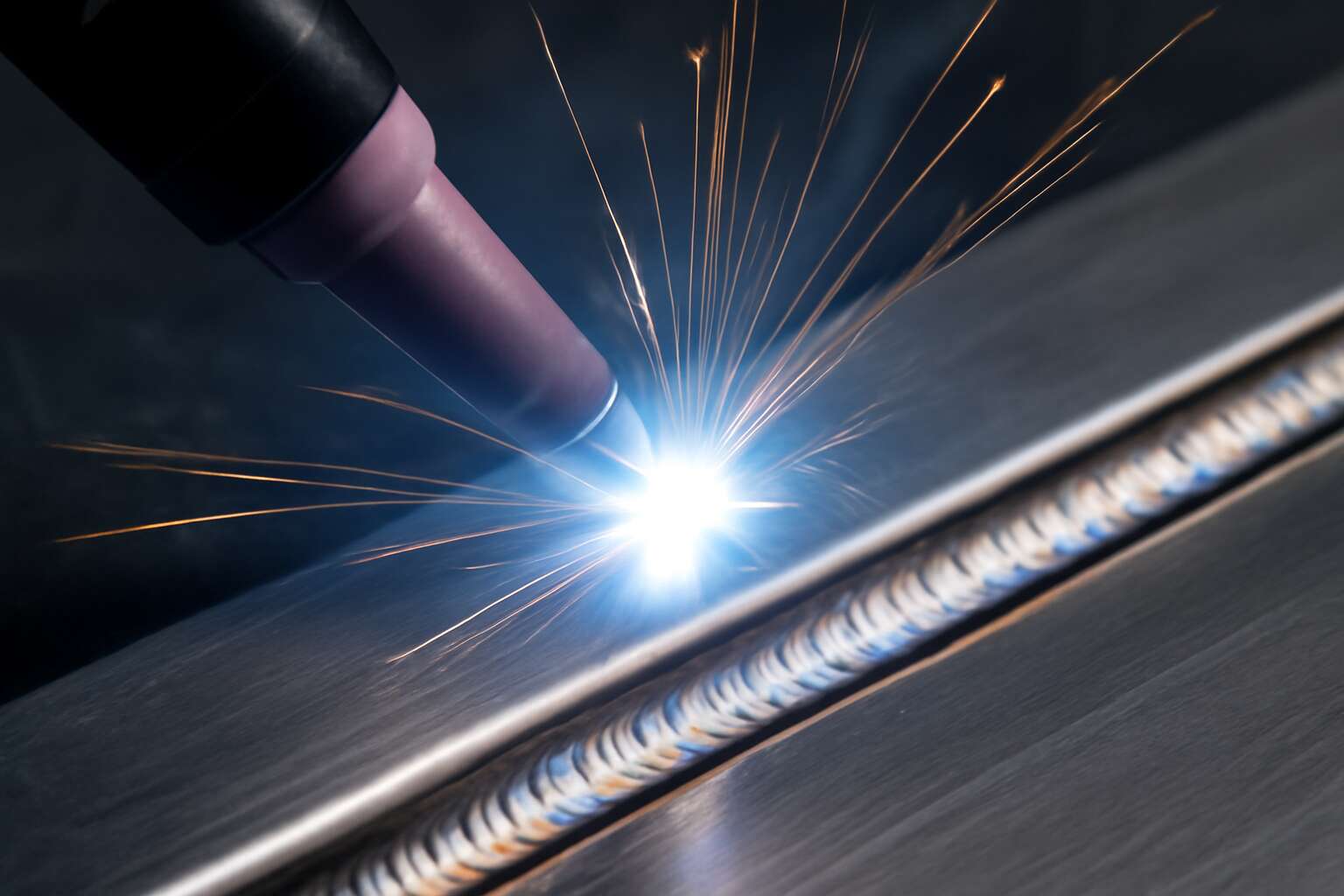
Understanding stainless steel weldability
Factors affecting weldability of stainless steel
In South Africa’s coastal workshops, a well-welded seam can outlast the salt and the noise, a quiet beacon of reliability. Stainless steel weldability hinges on something more subtle than strength alone—the dance between alloy chemistry, heat, and meticulous cleanliness. The question can stainless steel be welded is answered when one looks at alloy grades, filler metals, and joint design.
- Alloy composition and precipitation tendencies
- Surface preparation and cleanliness
- Heat input and welding method
- Post-weld treatment and passivation
In SA factories, the environment—coastal humidity, heat, and galvanic differences—shapes outcomes. Understanding these factors helps designers and welders craft joints that endure, turning stainless into a lasting companion for industry and home alike.
Stainless steel grades and their welding behavior
In South Africa’s coastal workshops, a quiet vow persists: can stainless steel be welded is not a test of brute strength but of harmony—between alloy, heat, and the breath of a clean surface. The austenitic line—304 and 316—treads heat with ease, while ferritic and duplex cousins demand a steadier tempo to avoid battle-scarred grains beneath the salt-stung air.
- Austenitic steels (304, 316): grafts well to conventional methods, preserving corrosion resistance when the surface remains clean.
- Ferritic steels (430, 446): weldable but with cautions on long-term corrosion performance and heat input.
- Duplex grades (2205, 2507): exceptional strength and corrosion resistance, demanding careful balance of heat and filler.
Across SA industries, reading this language of grades helps welders meet the sea with dignity—the seam standing as a quiet guardian rather than a weak spot.
Common welding challenges with stainless steel
In South Africa’s coastal workshops, the welding bench hums with a quiet promise: can stainless steel be welded is not a test of brute strength but a dialogue between alloy, heat, and a pristine surface. When alignment, cleanliness, and ambient conditions converge, stainless steels reveal their true resilience.
Common welding challenges dot this landscape, especially at the heat-affected zone. Sensitization, carbide precipitation, and micro-cracking can cloud long-term performance, while shielding and heat input shape the pace of the weld.
- Intergranular corrosion risk in austenitic grades
- Warping and distortion from uncontrolled heat
- Alloy compatibility and filler selection considerations
Understanding stainless weldability is a study of temperament: austenitic grades glide with familiar methods, ferritic strains demand gentler heat, and duplexes reward balance. Reading service conditions—chloride exposure, cleaning protocols, and the work’s cadence—frames what lies ahead.
Designing joints for stainless steel welding
Welding is a conversation the moment heat meets metal. In coastal workshops, the air tastes of salt, and the craft asks stainless to answer with integrity. Understanding can stainless steel be welded begins with respecting the alloy’s temperament and the surface pristine condition before the first tack. The difference is not just technique but trust—between materials, heat, and the cleanliness of every edge.
Designing joints for stainless welding demands a quiet plan that respects grade, thickness, and service exposure. Bevels, gaps, and fit-up govern heat flow and final distortion; the right geometry keeps shielding gas focused and microstructure honest.
- Joint type that suits the load and corrosion demands (butt, T, lap)
- Cleanliness and fit-up to prevent inclusions and ‘shadow’ welding
- Controlled heat input with appropriate filler and sequence
Wise joint design makes coastal welding durable.
Preparation and surface cleanliness for welding stainless steel
A spark has a memory, and coastal workshops taste of salt. The question “can stainless steel be welded” hinges on surface care as much as heat. Weldability begins with pristine beginnings: oils, fingerprints, and dust must be banished before the first tack. Clean surfaces invite a steady arc.
Within this quiet preface, a few considerations guide the moment metal meets intention:
- Remove oils, greases, and fingerprints with appropriate cleaners
- Use dedicated stainless tools to avoid cross-contamination
- Keep surfaces dry and lint-free to prevent inclusions
Even in South Africa’s coastal shops, cleanliness gives the alloy its best voice, guiding heat toward a stable, corrosion-resistant join. Post-weld passivation can restore the chromium oxide film, a quiet guardian against rust in marine environments.
Weldability and corrosion resistance trade-offs
Welding stainless steel isn’t a mystery so much as a negotiation with heat and oxide. The real question can stainless steel be welded—it’s a quieter hinge on the balance between weldability and corrosion resistance. Yes—but the answer depends on precision: tighter control of heat, cleanliness, and alloy choice yields fewer cracks and longer life. In a coastal workshop, a careful passivation after welding seals the memory of heat into a protective film, keeping rust at bay in salty air.
Trade-offs at a glance:
- Chromium oxide film retention versus carbide precipitation
- Heat input versus distortion risk in thin-walled sections
- Grade-specific weldability versus overall corrosion resistance
These dynamics shape every coastal workshop’s skyline, where metal meets moonlight and the alloy writes its own quiet story.
Welding methods and process control for stainless steel
TIG welding essentials for stainless steel
Stainless steel has carved a place in every South African workshop; globally, it accounts for about 10% of metal usage, a share that grows with corrosion-resistant demands. When you ask can stainless steel be welded, the answer hinges on alloy, thickness, and the right technique. TIG welding offers precise heat control that clarifies the picture.
Key TIG essentials are steady gas shielding, clean joints, and controlled arc characteristics. Balance heat input with travel speed; AC suits austenitic grades, while DC can stabilize the arc and reduce oxidation. I’ve watched teams that keep this balance deliver repeatable, pristine welds.
- Stable current and arc length
- High-purity argon shielding
- Appropriate tungsten geometry
- Filler compatibility and heat control
In practice, this approach supports durability and corrosion resistance across South African industries, from façades to process piping, while preserving weld integrity and aesthetics.
MIG welding considerations for stainless steel
Stubborn as a cathedral hinge, can stainless steel be welded? In practice, yes— with the right wire, gas, and technique. MIG welding for stainless demands a gentler touch than carbon steel: steady wire feeding, clean joints, and a deliberate travel speed.
Process control hinges on repeatable arc behavior and stable shielding. Use a compatible filler and a gentle root-to-cap transition; think of it as sculpting heat input without scorching the alloy.
- Steady wire feed and stable arc for a uniform bead
- Shielding gas integrity to prevent oxidation and porosity
- Filler selection that maintains corrosion resistance without compromising form
In South Africa, workshops balance practicality with pride, delivering durable stainless welds across façades and piping. Ultimately, the can stainless steel be welded question sits in plain sight—can stainless steel be welded? The answer is yes, when process control is treated with care and a dash of craft.
Stick welding applicability for certain grades
Across South Africa, steelwork in rural towns tells the same tale: a weld that endures is born from patience and control. As a veteran welder puts it, “A good weld is a quiet promise that lasts.” That promise guides every stainless project, from façades to piping.
Stick welding offers a rugged, field-friendly option for certain stainless grades. Process control hinges on steady arc behavior and clean joints; together with the right filler, it remains economical and effective for thicker sections in workshop and site settings.
- Filler selection aligned to corrosion resistance
- Cleanliness and moisture avoidance
- Controlled heat input to avoid warping
Ultimately, can stainless steel be welded? Yes—when you treat heat input with care and practice disciplined arc control. In SA workshops, that blend of craft and practicality keeps façades gleaming and piping leak-free, even under the Karoo sun.
Filler metals and shielding gases for stainless welding
In the Karoo sun and the workshop’s steady clang, a clean weld outlasts hesitation. This is not guesswork—it’s discipline. This begs the question: can stainless steel be welded under real-world South African conditions?
Filler metals and shielding gases tailor corrosion resistance and seam integrity. Consider the following choices:
- Filler metals: ER308L or ER316L for corrosion resistance; 347 for stabilization in heat-affected zones; match with base metal to avoid galvanic issues.
- Shielding gases: TIG uses pure argon; MIG often uses argon-based blends such as 98% Ar/2% O2 for stable arc and ductility; consider helium for deeper penetration in thick sections.
- Process control: maintain steady current, clean surfaces, and controlled heat input to prevent warping or sensitization.
With these safeguards, the art of stainless welding persists across South Africa’s workshops and sites—a quiet, durable vow against the heat and dust of daily life.
Heat input and process parameter control
Across South Africa’s workshops, steady heat control is the engine of reliability, cutting rework by 40%. An arc kept at the right distance lets filler metal do its work without warping. The result is a seam that endures in dusty, sunlit environments. This raises a question: can stainless steel be welded under real-world conditions?
Heat input and process parameter control are the craftsman’s compass. TIG offers precision with calm heat; MIG balances speed and control; stick welding on thicker sections demands attention. Use these ideas to guide the weld, keeping current steady and surfaces clean.
- Arbitrary travel speed and arc length shape heat input for a stable pool.
- Torch angle, arc gap, and contact tip to work distance reduce dilution.
- Posture and ergonomics help keep hands steady and heat buildup predictable.
South Africa’s landscapes remind us that success is discipline—clean joints, thoughtful parameters, and respect for the metal’s temper.
Quality assurance during welds
South Africa’s workshops run on a stubborn blend of grit and gear, where reliability is king and drama is banned. This is where the big question pops up: can stainless steel be welded?
Welding methods and process control act as the craftsman’s compass, guiding heat and distortion through field conditions. With steady current and clean surfaces, a stable pool forms, and the metal’s temper holds its ground, even under sun and dust.
Quality assurance during welds follows steady habits: visual checks, consistent parameter logging, and targeted non-destructive testing when necessary—because precision is the best sunscreen against unseen flaws and costly rework.
Materials, alloys, and corrosion considerations
Austenitic, ferritic, and martensitic stainless categories
Stainless steel is tough, but welding it is a chemistry puzzle. A craftsman’s eye and the right process turn potential into precision. The result hinges on alloy choices and how heat interacts with the metal under South Africa’s shop conditions.
Three families shape stainless behavior: Austenitic, Ferritic, and Martensitic. Each carries distinct corrosion profiles and weldability traits. The truth is can stainless steel be welded only when you align alloying, heat, and shielding to the fabricator’s goals.
- Austenitic: high Cr-Ni, excellent corrosion resistance
- Ferritic: chromium-rich, lower nickel, magnetic
- Martensitic: higher hardness, temperable, relatively less corrosion resistant
Filler metal compatibility and corrosion resistance
Stainless steel isn’t shy about standing up to rust, but the weld is a chemistry puzzle that shows up under South Africa’s hot, dusty shop conditions. Materials and alloys behave differently when heat enters the mix, making the weld more craft than recipe—it’s a craft.
Filler metal compatibility guides both strength and corrosion resistance. When you ask can stainless steel be welded, success hinges on matching base and filler chemistries, controlling dilution, and selecting compatible shielding for the environment.
- Base-metal chemistry and corrosion profile
- Filler alloy composition and dilution tolerance
- Shielding gas and heat input interaction
Local exposure and humidity influence the long-term outlook; the right alloy choice and process discipline help the joint stay reliable in demanding conditions.
Effect of alloying elements on weld properties
In our South Africa workshops, materials, alloys, and corrosion considerations shape every bead cooling in heat and dust. The chemistry isn’t a simple recipe; it’s a weather system that shifts with humidity and wind. I’ve learned that beadwork speaks of dilution and shield against the harsh environment. In SA, corrosion-related failures in welded stainless joints cost millions yearly. When you ask can stainless steel be welded, you’re weighing dilution, filler compatibility, and the shield against environments that erase signal and memory.
- Chromium builds the protective passive film that blocks rust.
- Nickel stabilizes austenitic structures, boosting ductility.
- Carbon content drives sensitization risk in heat-affected zones.
- Molybdenum improves pitting resistance in chloride environments.
- Nitrogen strengthens corrosion resistance and solid-solution strength.
Shielding gas choices and crisp heat control meet local humidity and dust to determine long-term reliability. The right alloy mix stays loyal when conditions tighten, and disciplined practice keeps the joint honest.
Dissimilar metal welding with stainless steels
In South Africa’s workshops, materials and alloys are weather systems that shape every bead of weld metal. When stainless grades meet incompatible cousins, corrosion can creep into hidden corners, and dilution becomes the quiet governor of performance. In SA, corrosion-related failures in welded joints cost millions yearly. can stainless steel be welded is not a mere yes-or-no riddle; it’s a calculation of shielding, filler compatibility, and how the joint will endure humid, dusty air.
- Shielding gas selection matters in our climate—stability beats sheer flow, especially in humid air.
- Filler metal compatibility is critical when welding stainless to other alloys to avoid unwanted dilution products.
- Heat input must be controlled to limit sensitization and corrosion-prone zones in the heat-affected area.
Durability in SA hinges on the right alloy mix and disciplined practice, letting corrosion resistance and mechanical integrity coexist amid dust and heat.
Heat treatment and post-weld aging considerations
Across South Africa, humidity and dust forge a stubborn corrosion profile—it’s the quiet verdict on every weld. The climate demands more than skill; it asks for foresight, material discipline, and an approach that survives harsh air long after the torch cools, as if the wind itself seals the joint.
Materials and alloys matter; austenitic, ferritic, and martensitic families react differently to heat. can stainless steel be welded, and still maintain corrosion resistance? Yes—when you respect filler compatibility and alloy interactions. Mismatches invite dilution, pitting, and hidden weaknesses that surface under humid service.
- Solution anneal to restore the structure
- Stabilize to prevent sensitization
- Controlled cooling to relieve stresses
Heat treatment and post-weld aging are the final guardians of reliability in dusty SA environments.
Pre-cleaning and surface conditions for weld quality
In SA’s demanding environments, the question still echoes: can stainless steel be welded? The short answer depends on alloy family and surface discipline; the weld must respect the metal’s nature to hold its corrosion shield after the torch cools.
Austenitic, ferritic, and martensitic stainless families respond differently to heat and dilution. When choosing filler metal and shielding gas, aim for compatibility that preserves corrosion resistance rather than inviting pitting and hidden weaknesses in humid service.
Pre-cleaning and surface conditions are the quiet sentinels of quality. Remove oils, dust, and scale; ensure dryness and rust-free metal; and verify finish and fit-up before striking an arc.
- Degrease with an appropriate solvent
- Mechanical clean to a bright, oxide-free surface
- Rinse and dry before assembly
Joint design, preparation, and verification
Surface preparation and contamination control
And yes, can stainless steel be welded? The truth hinges on joint design, fit-up, and verification. When considering can stainless steel be welded, aim for precise geometry, generous root access, and balanced weld margins. A thoughtful design minimizes stress risers and corrosion pathways. As one welder quips, “fit-up is 90% of the job.” Verification follows with careful QA checks and, if needed, nondestructive testing to confirm continuity and seal integrity.
Surface preparation and contamination control for stainless welds demand discipline. Remove oils, coolants, and oxides prior to joining; a dry, bright surface reduces the risk of inclusions and porosity. Inspect edges and clamp surfaces to maintain alignment under heat input, and ensure moisture is banished from the work zone.
- Thorough degreasing with compatible solvents
- Rust and scale removal followed by a final wipe
- Moisture control and clean handling to prevent recontamination
Joint fit-up and geometry considerations
Joint design is the quiet architect of a successful weld. can stainless steel be welded, the question, points to a deeper truth: it’s not merely alloy math but the geometry that guides heat, flow, and restraint. In my experience, a well-gauged fit-up speaks louder than any arc. Thoughtful joint design minimizes stress risers and leakage pathways; fit-up and geometry are the bedrock of a sealed, durable seam.
- fit-up precision and tolerances
- consistent root geometry across the joint
- secure clamping and alignment to preserve continuity under heat input
Verification follows with QA checks and, if needed, nondestructive testing to confirm continuity and seal integrity.
Preheating and interpass temperature guidelines
The question can stainless steel be welded becomes a bridge between art and metallurgy. Joint design, with careful geometry, guides heat, flow, and restraint, turning a seam into a quiet triumph.
Fit-up precision and tolerances matter: consistent root geometry across the joint, secure clamping and alignment to preserve continuity under heat input.
Validation follows—QA checks and, when necessary, nondestructive testing—to confirm a continuous, leak-tight seam.
Preheating and interpass temperature guidelines temper the heat, preventing excessive dilution and distortion.
- Preheating considerations
- Interpass temperature expectations
- Thermal management strategies
In South Africa’s fabricators, these principles sing through every stainless project.
Troubleshooting porosity, cracking, and distortion
That bridge between design and metallurgy—the joint—thrives on thoughtful joint design, meticulous preparation, and rigorous verification. With clean geometry, careful fit-up, and secure clamping, heat stays predictable and keeps flow, restraint, and continuity in balance. The question can stainless steel be welded becomes a practical yes when the seam is engineered to breathe rather than battle.
Verification follows—QA checks and, when needed, nondestructive testing—to confirm a continuous, leak-tight seam. Troubleshooting porosity, cracking, and distortion hinges on root geometry, cleanliness, and steady heat input.
- Misalignment or gaps at the root
- Contamination or oxide films on surfaces
- Inconsistent heat input causing distortion
Preheating and interpass temperature guidelines temper the heat, reducing dilution and distortion, while thermal management strategies keep the seam true to its design.
In South Africa, these principles sing through every stainless project.
Inspection methods: visual, dye penetrant, and RT/UT
In joint design, preparation, and verification, the seam is given a voice—clear geometry, clean surfaces, and firm restraint that allow heat and metal to align rather than clash. The South African fabricator asks the practical question can stainless steel be welded, and the answer rings true when the joint breathes—not fights—through fit-up and cleanliness.
Verification follows, with QA checks and nondestructive testing to confirm a continuous, leak-tight boundary. Inspection methods include:
- Visual examination of fit-up, alignment, and surface condition
- Dye penetrant testing to reveal surface-breaking flaws
- RT/UT
Trust in the process, and the seam becomes a confident bridge between design intent and metallurgical reality.
Post-weld cleaning and passivation procedures
In the workshop’s dawn, the seam speaks softly of partnership—fit, finish, and restraint working in concert. The practical question can stainless steel be welded? The answer rests on joint design, careful preparation, and verification that allow heat and metal to align rather than clash.
Post-weld cleaning and passivation are the quiet guardians of longevity. Cleaning lifts heat tint and surface oxides, while passivation reestablishes the chromium-rich film that defends against corrosion. The boundary becomes a confident bridge between design intent and metallurgical reality.
Key considerations after welding include:
- Adequate surface cleanup to remove oils and scale
- Passivation to restore protective chromium film
- QA documentation and traceability of the weld
When these elements breathe together, the welded joint isn’t a nod to chance but a reliable, enduring connection—especially in South Africa’s demanding environments where steel and heat meet road and river alike.
Industry applications and best practices
Food and pharmaceutical welding considerations
Across South Africa’s precision-driven industries, can stainless steel be welded is not a mere curiosity but a practical necessity. In food and pharmaceutical corridors, welds must resist contamination and survive regular sanitization, all while preserving structural integrity beneath the machine-like rhythms of hygiene rites.
Industry applications include:
- Food and beverage processing equipment and piping
- Dairy equipment and milk transport containers
- Pharmaceutical cleanroom systems and sterile process lines
Food and pharmaceutical welding considerations underscore corrosion resistance, surface finish, and compatibility with sanitizers. Opting for austenitic grades, maintaining spotless weld interfaces, and applying passivation after welding help sustain sterility and long-term performance; in practice, the choice of method and filler metals shapes reliability when safety is non-negotiable.
Chemical processing equipment welding tips
Across South Africa’s chemical and process industries, downtime costs are counted in repairs and lost throughput. The enduring question can stainless steel be welded? The answer rests on alloy choice, surface cleanliness, and disciplined heat management—factors that determine corrosion resistance, sterility, and long-term reliability.
Industry applications include reactors, pipelines, valves, and heat exchangers where sanitary standards and structural integrity matter most. In chemical processing equipment welding, the emphasis is on maintaining a pristine weld interface, aligning material compatibility with sanitizers, and ensuring finishes that resist contamination through repeat sanitization cycles.
- Prioritize thorough pre-cleaning and consistent surface condition
- Balance heat input and material compatibility to preserve corrosion resistance
- Follow post-weld cleaning and passivation for ongoing sterility
Marine and outdoor environment stainless welding
Coastal South Africa tests stainless welding like few other trades, where salt spray meets sun and frequent washdowns. can stainless steel be welded? Yes—when alloy choice, surface cleanliness, and disciplined heat control align to preserve corrosion resistance and structural integrity in outdoor marine conditions.
Marine industries rely on kiosks, platforms, and long-run pipework exposed to humidity and brackish spray. In these contexts, choose grades with corrosion resistance and ensure joints minimize crevices where salt can accumulate. Outdoor installations benefit from coatings and finishes that resist washdowns to extend service life.
- Surface cleanliness and dry storage
- Grade and filler compatibility for chloride environments
- Coatings and finishes that resist washdowns
These principles help projects endure South Africa’s coastal climate without compromising safety or performance.
Maintenance, repair, and long-term performance
South Africa’s coastal workshops aren’t forgiving: salt spray, sun, and periodic washdowns test every joint. A single, well-executed weld can be the difference between decades of service and costly downtime. In the field, can stainless steel be welded? Yes—when alloy choice, surface cleanliness, and disciplined heat control align to preserve corrosion resistance in harsh marine environments.
Industry applications demand maintenance, repair, and long-term performance that withstand humidity and brackish exposure. To keep assets reliable across kiosks, platforms, and pipelines, consider these pragmatic practices:
- Smart alloy pairing matched to service conditions
- Consistent energy input and thoughtful heat management
- Protective finishes and ongoing inspection routines
South Africa’s coastal climate rewards welds that stay legible under corrosion tests, delivering fewer outages and safer structures for communities that depend on coastal infrastructure.
Certification and training implications
Across South Africa’s coastal workshops, a single, well-certified weld can extend decades of service and cut costly downtime. The industry faces a persistent question in the salt-kissed air: can stainless steel be welded without sacrificing corrosion resistance? When alloy choice, surface cleanliness, and heat control align, even harsh marine conditions yield durable joints.
Certification and training implications include:
- Cross-sector competency frameworks aligned with marine welding standards
- Qualification pathways covering stainless grades, filler metal compatibility, and inspection literacy
- Regular refresher training and re-certification to reflect evolving processes and corrosion tests
As projects along kiosks, platforms, and pipelines push deeper into coastal environments, certification keeps workmanship steady, and ongoing training preserves performance under salt spray.
Safety and PPE for stainless welding
Coastal South Africa tests steel and nerve in equal measure, from offshore platforms to harbour upgrades. can stainless steel be welded, the industry often asks, and the answer rests on discipline, surface integrity, and PPE that never breaks a stride.
Industry applications demand rugged joints, but safety is the passport. PPE isn’t ornamental; it’s the first line of defence against spatter, fumes, and fatigue.
- Welding helmet with appropriate shade for stainless arc
- Flame-resistant clothing and cut-resistant gloves
- Respiratory protection appropriate for stainless fumes
- Hearing protection and safety boots
In coastal workshops, a culture of safety and quality travels with every project—from ships to shore installations—ensuring joints endure in marine exposure. The right PPE, clear signage, and a shared commitment to cleanliness make the arc both trustworthy and respectful of the environment.

0 Comments