
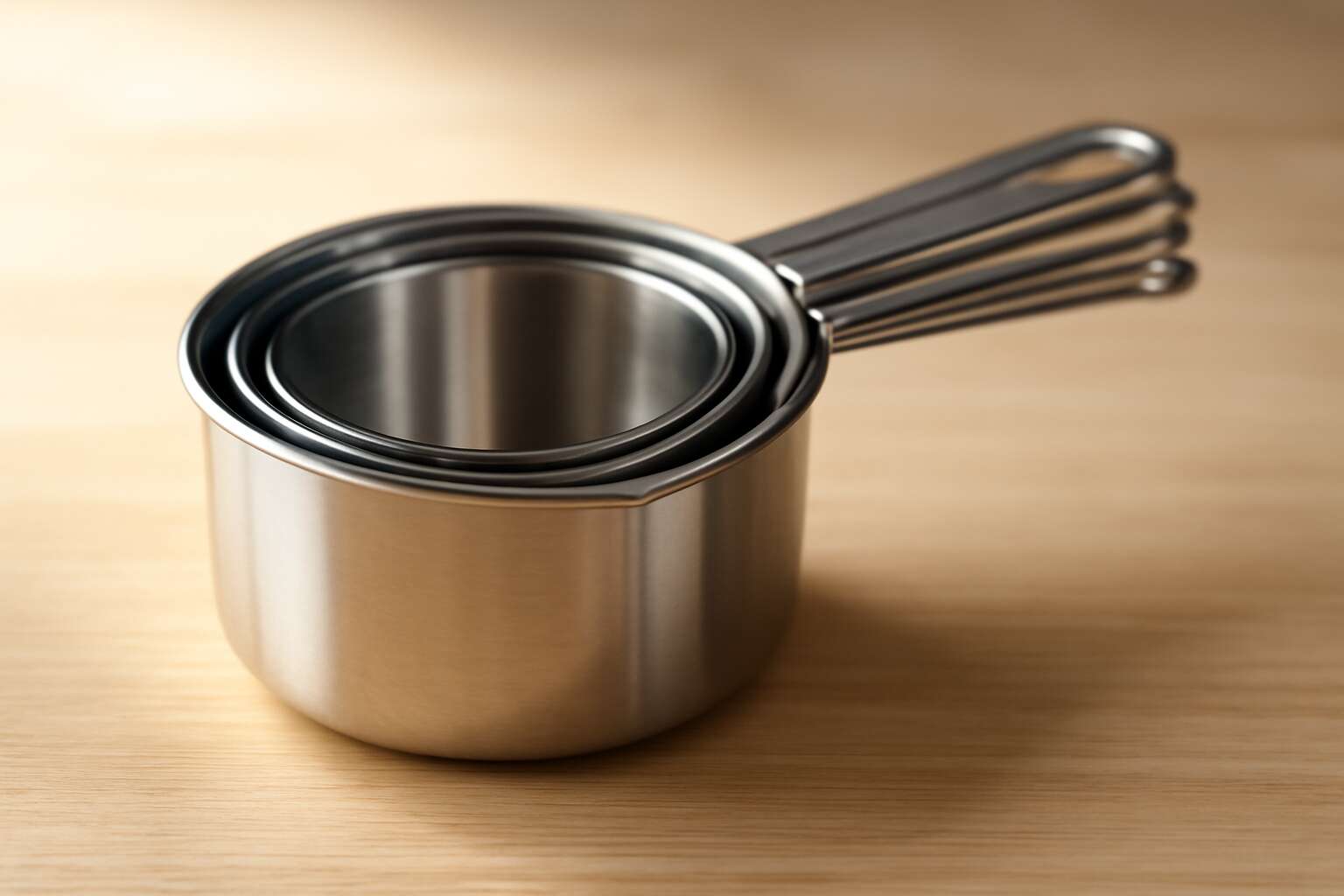
Understanding Stainless Steel Measuring Cups
What are measuring cups and how they work
In a South African kitchen where precision tastes like frost and fate, a simple measure can haunt or help your bake. A recent survey found that 67% of bakers see better outcomes when their volumes align with the recipe. The moment the cup meets the scale, order returns.
Understanding stainless steel cup measures is to understand patience itself. Their cool, unyielding iron promises accuracy, glare-free markings, and longevity. When you pour, the surface reveals every decimal, every whisper of gravity, turning rough estimates into ritual precision.
Among their virtues, a few truths are carved in metal:
- Nest together for compact storage.
- Markings stay legible even after years.
- Sturdy construction resists dents and corrosion.
Common sizes used in kitchens
Across South Africa, precision in the kitchen feels like a frost on glass: crisp, undeniable. A telling 67% of bakers report better outcomes when volumes match the recipe, turning guesswork into ritual. stainless steel cup measures arrive as calm conductors, their gleaming surfaces inviting accuracy and a quiet dignity to every bake.
These tools arrive in a choreography of common sizes that kitchens rely on.
- 250 ml (1 cup)
- 125 ml (1/2 cup)
- 80 ml (1/3 cup)
- 60 ml (1/4 cup)
- 15 ml (1 tablespoon)
Among their virtues, three truths endure: nest together for compact storage; markings stay legible even after years; sturdy construction resists dents and corrosion. They glide from hand to bowl with a calm assurance, turning flour and sugar into a symphony of precise pours.
Differences between cup sizes and metric units
In South Africa’s sun-kissed kitchens, a single measure can steer a meal from heartbreak to homecoming. More than 67% of bakers report better results when volumes match the recipe, and stainless steel cup measures become that steady heartbeat in the bowl.
Understanding how cup sizes translate to metric units helps take guesswork out of baking. Many stainless steel cup measures feature dual markings, with millilitres alongside the familiar cups, because 1 cup is commonly about 250 ml in local recipes. The result is a quiet reliability that travels from kitchen to kitchen.
- Dual markings in ml and cups for clarity
- Compact nesting saves space in busy South African kitchens
- Rugged construction resists dents and corrosion
In a home where feasts spring from a humble kitchen, these tools stay true: they nest without fuss, the markings endure, and the metal resists the knocks of daily life.
Why choose stainless steel for measuring cups
In South Africa’s sun-warmed kitchens, precision is priceless, and the right tools make it possible. “Precision is the secret ingredient,” says a seasoned baker, and stainless steel cup measures answer that call. These tools endure the daily rattle of a busy home cook, staying accurate and corrosion-free while the apron strings fly. They look as sturdy as they feel, a quiet companion from dawn to dinner.
Choosing stainless steel cup measures means welcoming non-reactive surfaces that won’t taint acidity in lemon curd or tomato sauce. They resist heat, clean up in a flash, and resist dents that plague cheaper plastics. A solid, recyclable choice that promises long life in a South African kitchen and beyond.
Types of Stainless Steel Measuring Cups
Standard measuring cups in stainless steel
“Precision is poetry in the kitchen,” a SA baker often says, and stainless steel cup measures help it sing. These tools marry durability with exactness, resisting dents and corrosion while keeping increments true. For home cooks and pro bakers alike, the standard stainless steel measuring cup set is a reliable chorus that survives the heat and humidity of our kitchens.
Types of stainless steel cup measures vary with how you want to work. Some are single-piece metal with an ergonomic handle; others nest neatly for compact storage; a few feature a rolled rim and pour-spouts for liquid accuracy.
- Classic single-piece cups with a sturdy handle
- Nested sets for space-saving storage
- Pour-spout designs for liquids and precise leveling
Whichever form you choose, stainless steel cup measures resist aroma absorption and are easy to clean, keeping your kitchen rituals crisp and reliable.
Nested and stacking designs for storage
In South Africa’s busy kitchens, space is currency. A well-known baker declares, “Stack it neat, bake with ease,” and nesting tools keep the bench clear when service heats up.
Nested and stacking designs redefine how stainless steel cup measures live in a drawer. They slip inside each other for compact storage, protect increments, and speed the hunt for the right size when timing matters. These benefits make stainless steel cup measures practical.
- Space-saving stackability fits slim kitchen drawers
- Fast access with a natural order from small to large
- Durable, dent-resistant construction that cleans easily
For cooks juggling deadlines, nesting systems offer quicker mise en place and calmer workflows in tight SA spaces, with stainless steel cup measures as a dependable backbone.
Material grades and durability considerations
In South Africa’s bustling kitchens, space is currency, and every tool earns its keep! Types of stainless steel measuring cups reveal their true character in performance and longevity. 304 stainless steel, the 18/8 standard, offers reliable corrosion resistance and adaptability, while 316 stainless steel endures coastal humidity and salt air with quiet resilience.
- Grade 304 (18/8): balanced corrosion resistance and value
- Grade 316: superior salt and acid resistance for coastal kitchens
- Finish options: satin or mirror that influence cleaning and hygiene
- Dishwasher compatibility and passivation for lasting shine
Finish and fabrication choices shape daily reliability—from dent resistance to edge integrity and cleaning ease. With these considerations, stainless steel cup measures become steadier companions in tight SA spaces.
Color coded and marked sets for quick reference
South Africa’s bustling kitchens rely on swift, precise prep. Color-coded measuring sets transform clutter into clarity, turning seconds into certainty. Industry insight shows that visible codes can speed up tasks by as much as 30%, making the choice of cup sets as important as the recipe itself.
These stainless steel cup measures come marked with embossed or laser-etched indicators and color bands that map to common sizes. A quick glance tells you exactly what you’re grabbing, even when gloves slow your touch.
Try one of these common color-to-size maps:
- Red: 1/4 cup
- Blue: 1/3 cup
- Green: 1/2 cup
- Yellow: 1 cup
Using Stainless Steel Measuring Cups in Cooking and Baking
Reading measurements and quick conversions
Using stainless steel cup measures in the kitchen feels like wielding a trusted compass through a bustling market of recipes. In cooking and baking, reading measurements becomes a subtle spell, guiding batter and broth with quiet precision. The gleam of stainless against your counters inspires confidence, turning familiar steps into a small ceremony—level scoops, clean pours, and motherly, measured patience that never spills the magic.
Here are quick conversions to keep you nimble in the kitchen:
- 1 cup = 240 ml
- 1/2 cup = 120 ml
- 1 tablespoon = 15 ml
Tracking volume in recipes accurately
Precision is the heart of every recipe, a spark that turns a hectic kitchen into a trusted workshop. “Precision is the heartbeat of cooking!” a seasoned home chef once said, and stainless steel cup measures make that heartbeat audible. In South Africa’s bustling kitchens, tracking volume in recipes accurately transforms guesswork into confidence as bowls ring with quiet, reliable rhythm.
With stainless steel cup measures at hand, you pour with purpose, swap scoops effortlessly, and keep conversions fluent. The result is consistent texture and flavor, batch after batch, whether you’re baking koeksisters or simmering stock. These tools prioritize accuracy, durability, and grace under pressure in busy kitchens.
- Etched markings that stay legible through daily use
- Ergonomic handles for steady pouring
- Dishwasher-safe cleaning for quick turnover
Precision techniques for dry vs wet ingredients
In South Africa’s kitchens, accuracy isn’t a nicety—it’s fuel. “Precision is the secret spice of a successful bake,” a seasoned home chef once said, and stainless steel cup measures give that principle tangible rhythm.
For dry ingredients, the method is ritual: scoop lightly, then sweep off the excess with a flat edge; this keeps density consistent in koeksisters and masala blends.
- Dry ingredients—level, not heaped; scoop and sweep with a flat edge for true density.
- Wet ingredients—pour at eye level, with a steady cadence, using a separate cup to prevent cross-contamination.
With these tools by hand, you pour with purpose, and accuracy travels from kitchen to table.
Practical tips to maintain measurement accuracy
In South Africa’s kitchens, precision is fuel, not a nicety. A recent kitchen survey found that 62% of home cooks admit their measurements derail a dish at least once a week. Enter stainless steel cup measures—a quiet, dependable cadence that steadies the pot and earns the trust of every recipe.
These tools feel like a well-tailored suit for the pantry: sturdy, dishwasher-friendly, and forgiving of the chaos that a rushing morning can unleash. I trust them to keep chaos in check on a busy morning. The bright markings stay readable, and the metal conducts just enough heat to remind you of accuracy without drama.
Practical reminders to keep accuracy crisp:
- Keep interior surfaces polished so markings stay legible
- Store sets with care to avoid dents that bias volume
- Trust etched graduations for quick reference in busy moments
Temperature considerations when measuring liquids
In South Africa’s bustling kitchens, precision is the new charm—62% of home cooks confess their measurements derail a dish at least once a week. Enter stainless steel cup measures, the quiet, steadfast chorus that keeps recipes poised under pressure.
When measuring liquids, temperature matters more than you might admit. The cups conduct heat just enough to remind you to wait for the correct level, but they don’t absorb flavors or drama. Keep liquids at room temperature for reliable readings and read the meniscus at eye level to avoid over-pours.
- Let liquids reach room temp.
- Read at eye level.
- Avoid dented cups.
These quiet tools deliver consistent results—the legible markings, gentle heat transfer, and smart stacking that keep a busy SA kitchen tidy. A well-chosen set blends precision with panache.
Care, Maintenance, and Longevity of Stainless Steel Measuring Cups
Cleaning and drying practices to prevent corrosion
In South Africa’s bustling kitchens, precision meets poetry, and a striking stat lingers: 90% of corrosion risk vanishes when moisture is kept in check and surfaces remain gleaming. Stainless steel cup measures stand as quiet sentinels.
Stainless steel cup measures carry a quiet confidence—the alloy resists many foes, yet even them crave respectful care to keep their mirror-bright finish and true measures through daily tides of use.
After use, it’s the subtle ritual of drying and proper storage that prevents a whisper of corrosion. For stainless steel cup measures, dryness and cleanliness guard accuracy and keep the gleam intact.
With that reverent care, these tools become more than utensils; they endure seasons of recipes across South Africa’s kitchens, standing up to time while preserving form, function, and the poetry of precise measures.
Preventing stains, rust, and wear over time
South Africa’s kitchens hum with heat and humor, yet the quiet truth remains: 90% of corrosion risk vanishes when moisture stays down and surfaces stay gleaming. That’s the daily miracle stainless steel cup measures quietly deliver.
These stainless steel cup measures resist many foes, but even they benefit from respectful care to keep a mirror finish and precise lines as daily tides of use roll in.
- Moisture control and gentle handling protect sheen and prevent dulling of markings
- Avoid abrasive cleaners or tools that scratch the finish
- Store in a dry, stable spot to guard against rust and wear
With proper care, these tools outlive trends, turning every recipe into a quiet testament to durability.
Storage tips to preserve measurement marks
In busy South African kitchens, a small truth endures: 90% of corrosion risk vanishes when moisture stays down and surfaces stay gleaming. stainless steel cup measures stand as a quiet advantage, a trustworthy companion as pots sing and ovens glow.
Care and maintenance for these tools is restraint in action. Moisture control and gentle handling protect sheen and prevent dulling of markings over time; harsh scrubbing and abrasive surfaces are avoided by design. A dry, stable corner—out of direct heat and damp—preserves the mirror finish and the crisp numerals that guide every measure.
With proper care, stainless steel cup measures outlive trends, turning each recipe into a quiet testament to durability. They stay legible and accurate, ready for the next South African kitchen moment.
When to replace measuring cups and signs of wear
In busy South African kitchens, the crude truth holds: 90% of corrosion risk vanishes when moisture stays down. ‘stainless steel cup measures’ are built to endure the bustle of a South African kitchen. Care and longevity begin with restraint: moisture and heat fade engravings and dull mirrors. They stay legible when dried promptly and kept away from damp corners, and when handled with a light touch. Their quiet resilience and stable markings keep every recipe on track as pots sing and ovens glow.
Signs of wear and when to consider replacement:
- Fading numerals that blur readability
- Dents or bends that throw off measurement
- Small rust spots or pitting despite cleaning
With proper care, these tools outlive trends, remaining legible and accurate for many South African kitchen moments.
0 Comments