
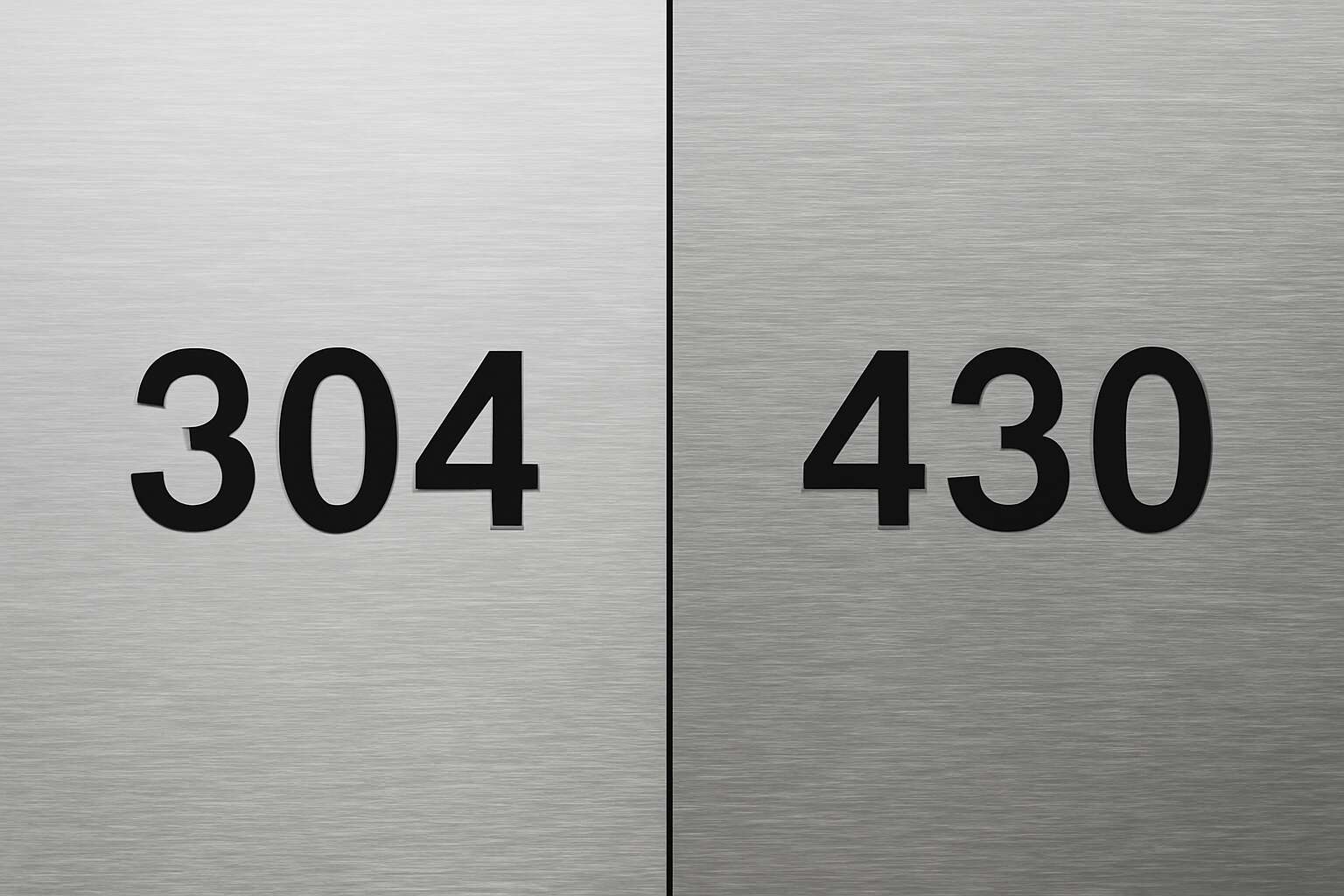
Overview and comparison of stainless steel grades 304 and 430
Introduction and at-a-glance
Stainless steel is the quiet backbone of South Africa’s kitchens and coastal projects—and the choice between stainless steel 304 vs 430 often decides how long a surface stays pristine. A seasoned craftsman once said, “Quality is a habit formed in the detail.” The difference shows in corrosion resistance, composition, and aging under heat and humidity.
304 offers strong corrosion resistance in coastal South Africa and food-contact surfaces, while 430 is ferritic, magnetic, and handles heat, but can tarnish in salty air. In practice, 304 is preferred for kitchens and tanks, while 430 suits interior panels and economy-minded appliances.
At a glance:
- Corrosion: 304 is stronger in coastal environments
- Magnetism: 304 is non-magnetic; 430 is magnetic
- Applications: 304 for food and exterior panels; 430 for cost-conscious interiors
Chemical composition and metallurgy
In the workshop’s quiet hum, a single choice reveals the arc between brilliance and patience. “Small details decide the finish,” a craftsman once told me, and the stainless steel 304 vs 430 debate proves it. These grades are not merely metals; they’re maps of chemistry that show how surfaces weather heat, humidity, and salt—especially on South Africa’s coast!
This is an overview of stainless steel 304 vs 430 that anchors the discussion in chemistry and microstructure. 304 is austenitic, typically around 18-20% chromium with 8-10.5% nickel, yielding a non-magnetic, corrosion-resistant matrix. 430 is ferritic, about 16-18% chromium, with little or no nickel, offering magnetism and formability but lower resistance to salty environments.
- 304: austenitic, nickel-stabilized, non-magnetic, high corrosion resistance.
- 430: ferritic, magnetic, nickel-free, cheaper with decent formability.
- Environment matters: chlorides and salty air challenge ferritic grades more.
Performance and properties in service
Two paths, one spectrum of chrome and heat: stainless steel 304 vs 430 shapes a coastline of choices. In SA’s humid, salt-laden air, a small chromium difference can tilt the balance between shine and slow corrosion. stainless steel 304 vs 430 unfolds as a study in balance: alloying that favors non-magnetic elegance versus affordability and formability that wears well in gentler, but not chloride-heavy, environments. The scene is set by environment, where resistance becomes a narrative of patience and polish.
In service, 304 offers a forgiving matrix that resists staining, while 430 provides magnetic allure and workable form at lower cost. When sea spray, humidity, and temperature pulses are part of daily life, these two grades behave differently: the cleaner surface of 304 holds up longer in many coastal contexts, whereas ferritic 430 may seek maintenance sooner in chloride-rich atmospheres.
- 304: superb corrosion resistance, non-magnetic in typical service, keeps polished finishes gleaming longer.
- 430: magnetic, good formability, lower cost, but chloride-heavy environments demand more attention.
Applications, costs, and lifecycle considerations
Across South Africa’s coast and inland towns, the right alloy shapes more than metal—it shapes maintenance schedules and budgets. When weighing stainless steel 304 vs 430, you glimpse a balance between longevity, look, and upfront cost that echoes through years of service. A Cape Town fabricator once said, ‘the lasting choice pays back every season!’ I hear the same refrain in workshops around Cape Town.
Applications, costs, and lifecycle guide the decision in kitchens, façades, and everyday hardware.
- Applications: architectural panels, commercial kitchens, and general hardware
- Costs: 304 often carries a higher upfront price but reduces long-term maintenance; 430 tends to start lower
- Lifecycle: availability, recyclability, and maintenance cadence influence total ownership
Beyond price, projects consider exposure, collector networks, and end-of-life recycling. In SA, this trio helps teams choose materials that endure with dignity, renewals kept to a minimum, and communities kept intact.


0 Comments